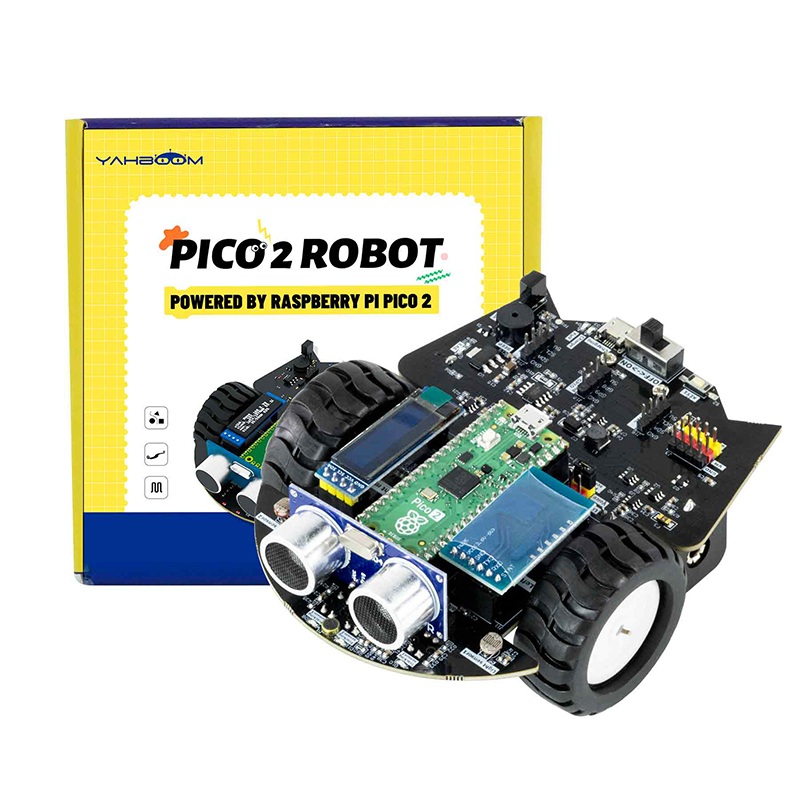
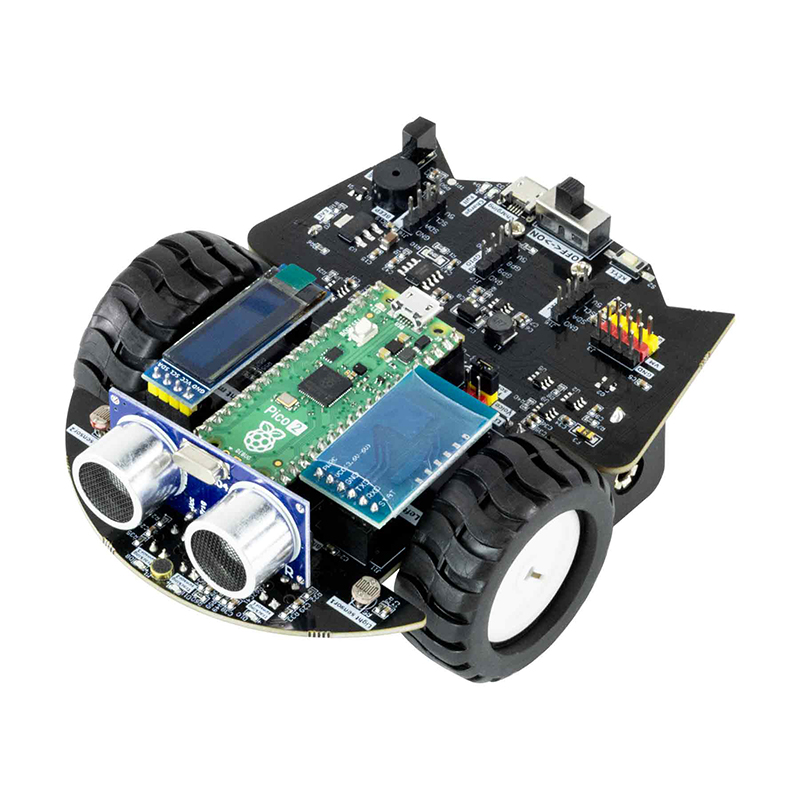
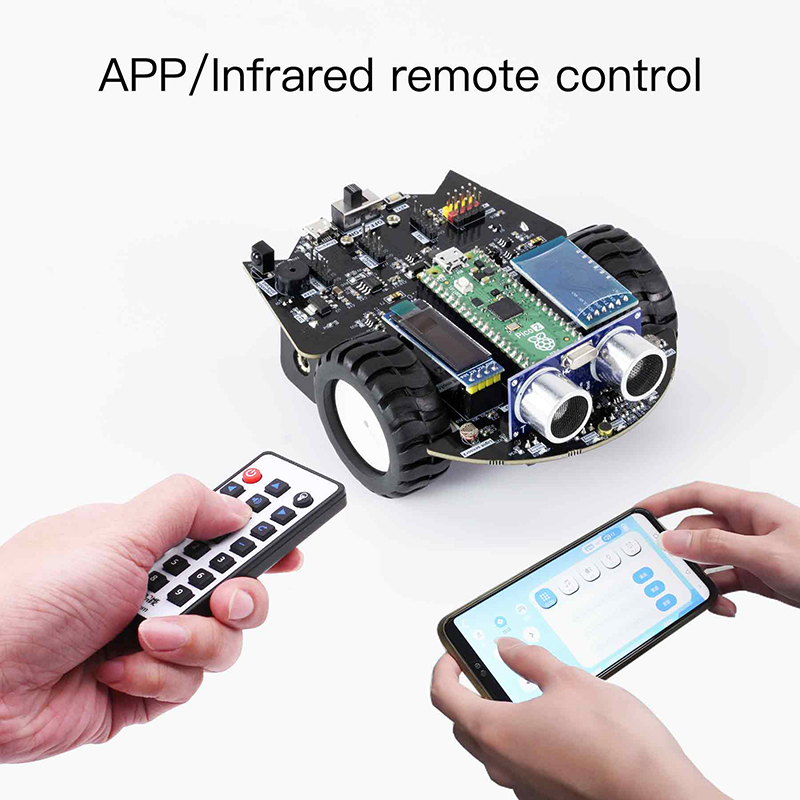
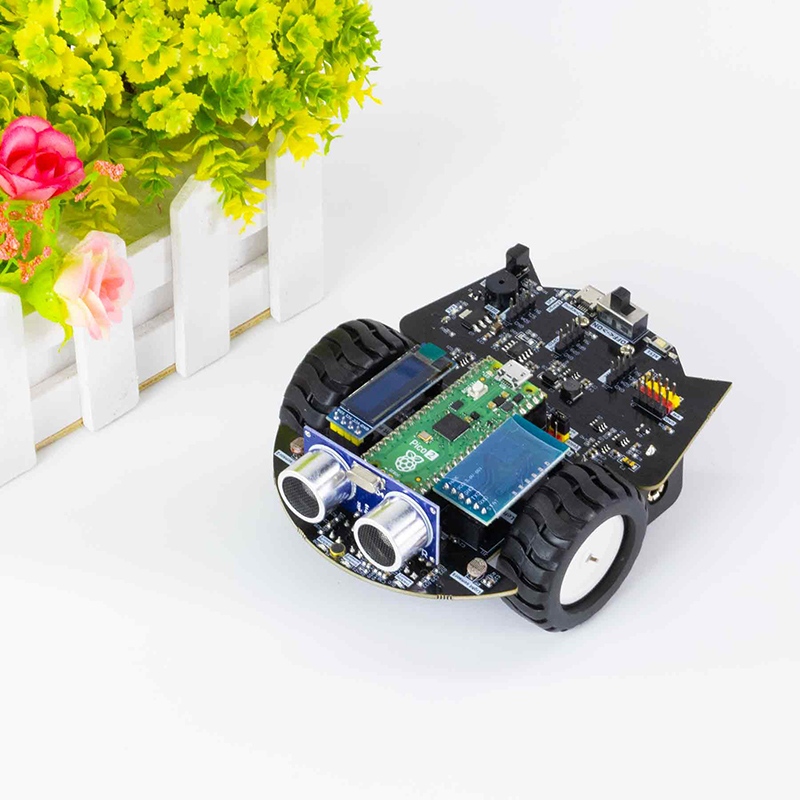
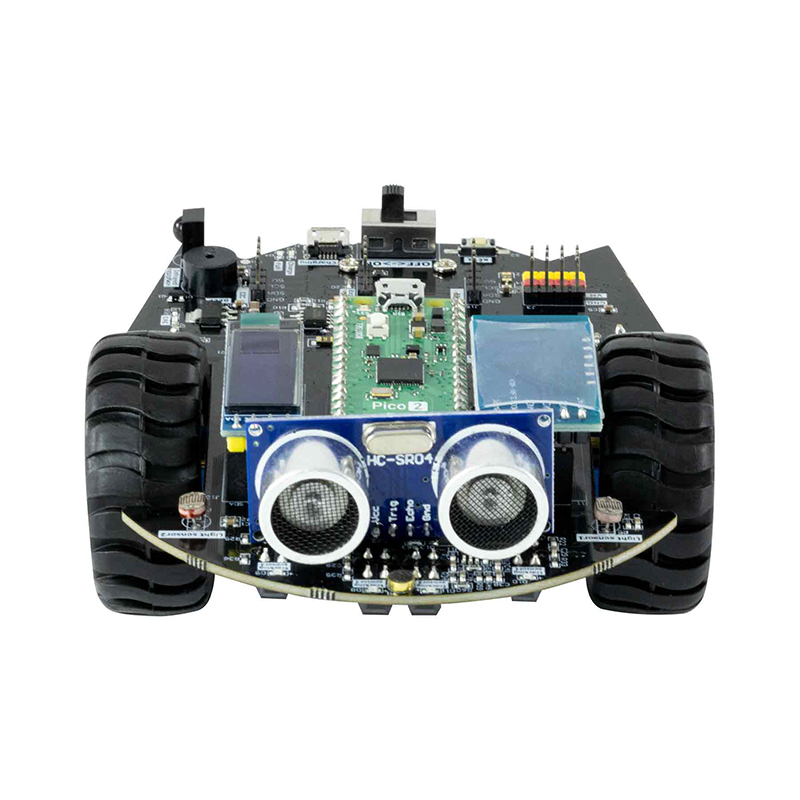
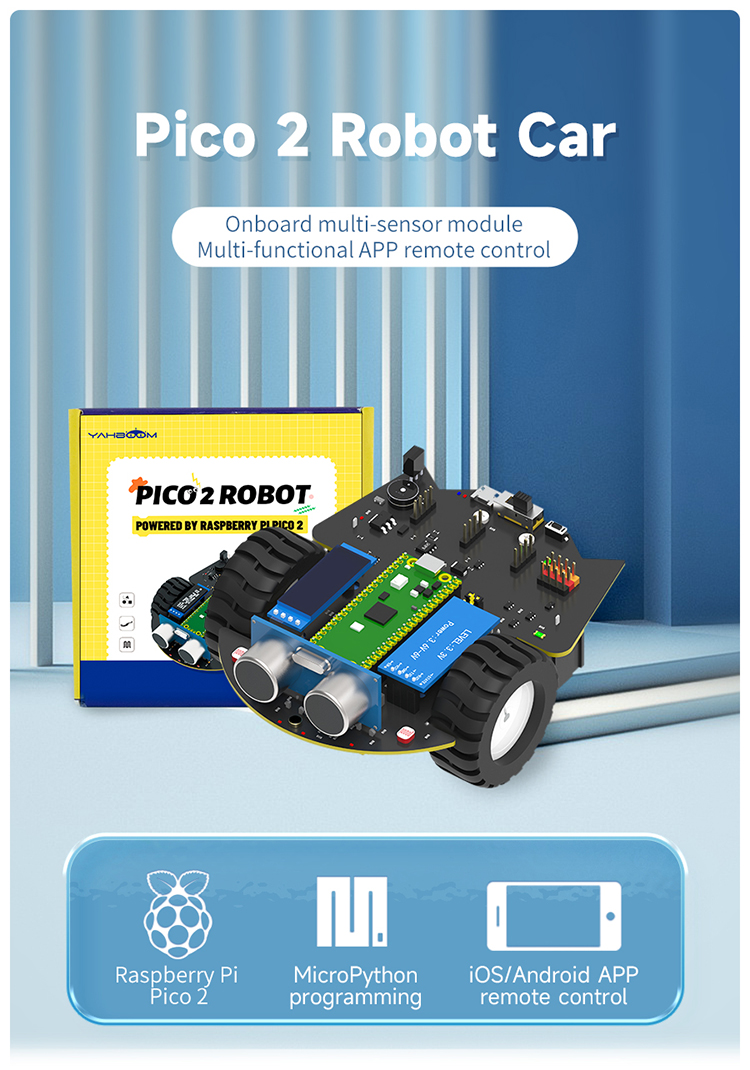
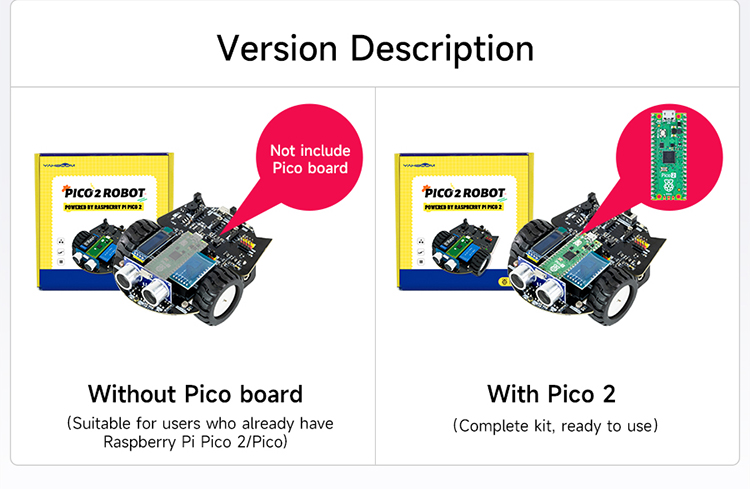
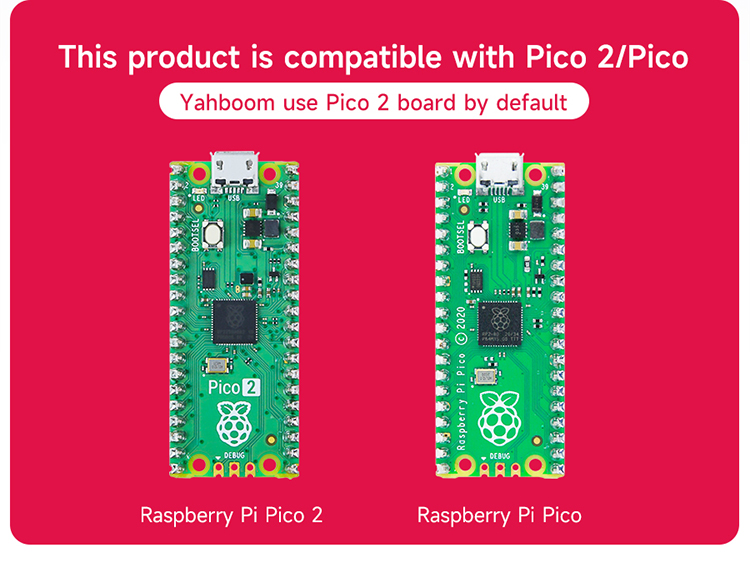
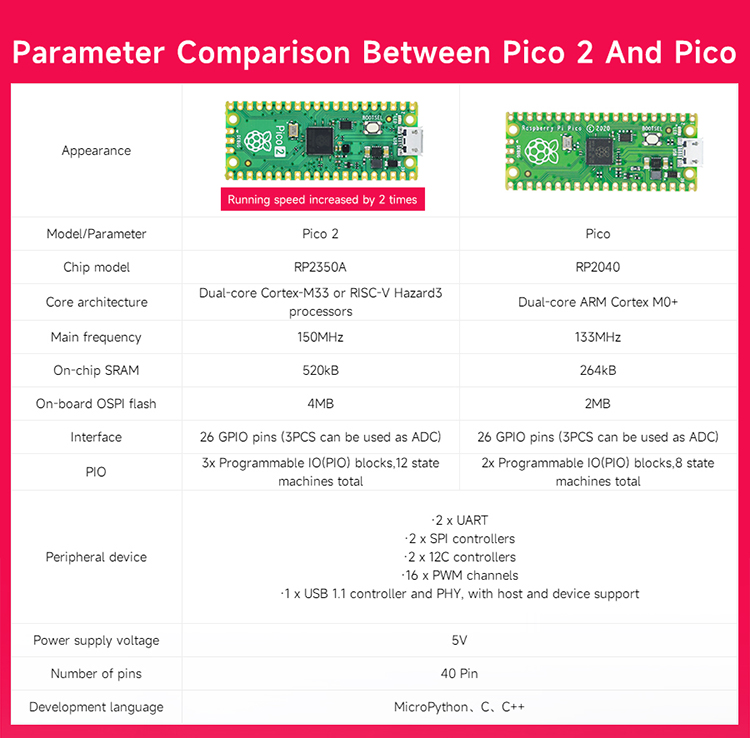
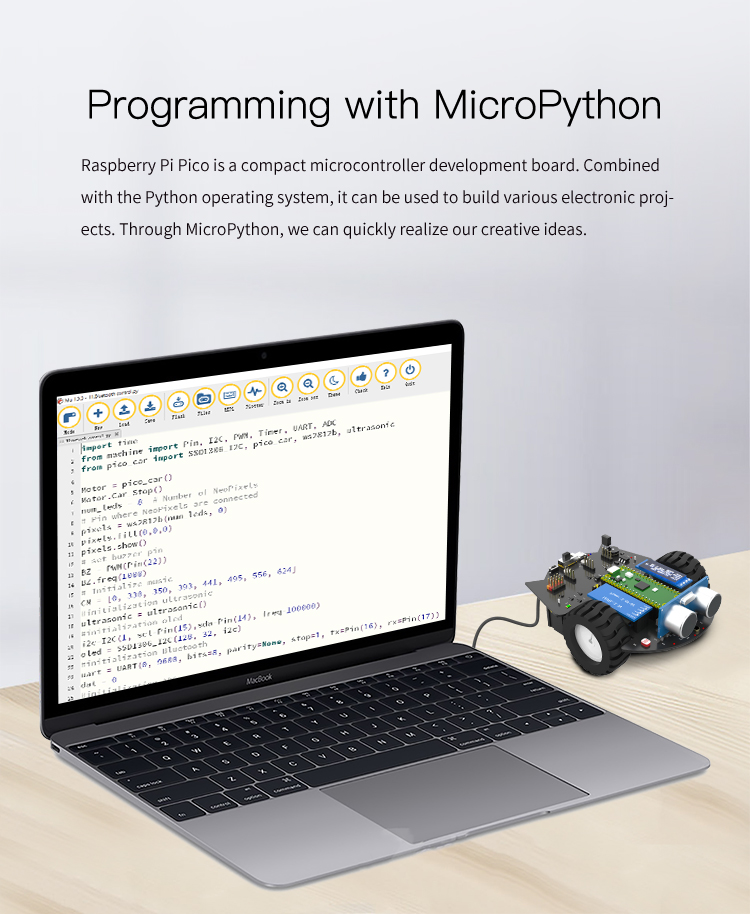
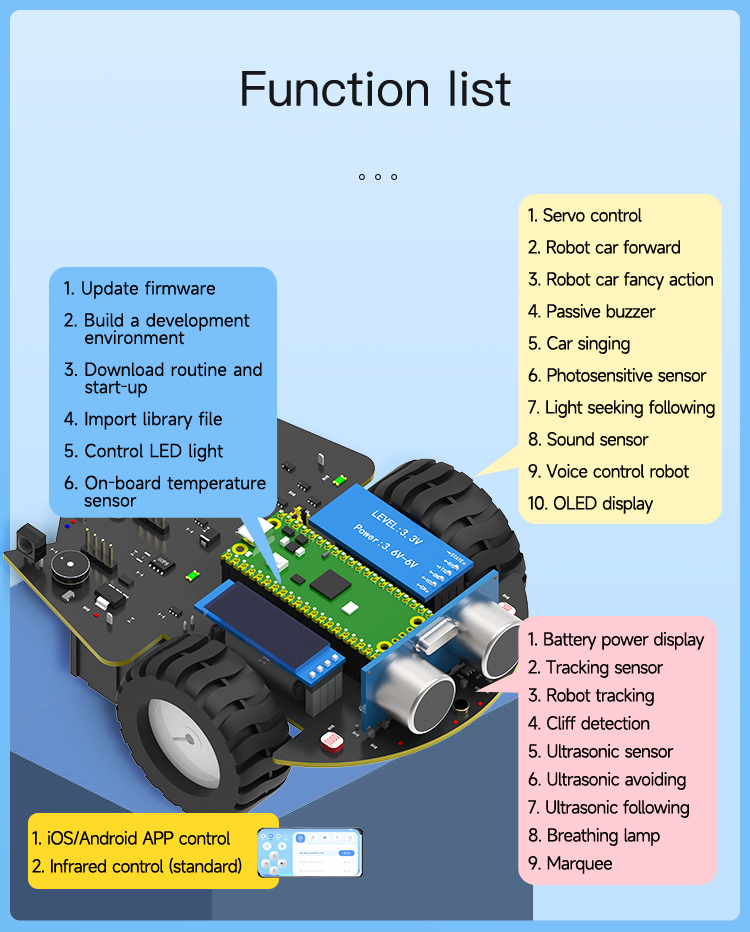
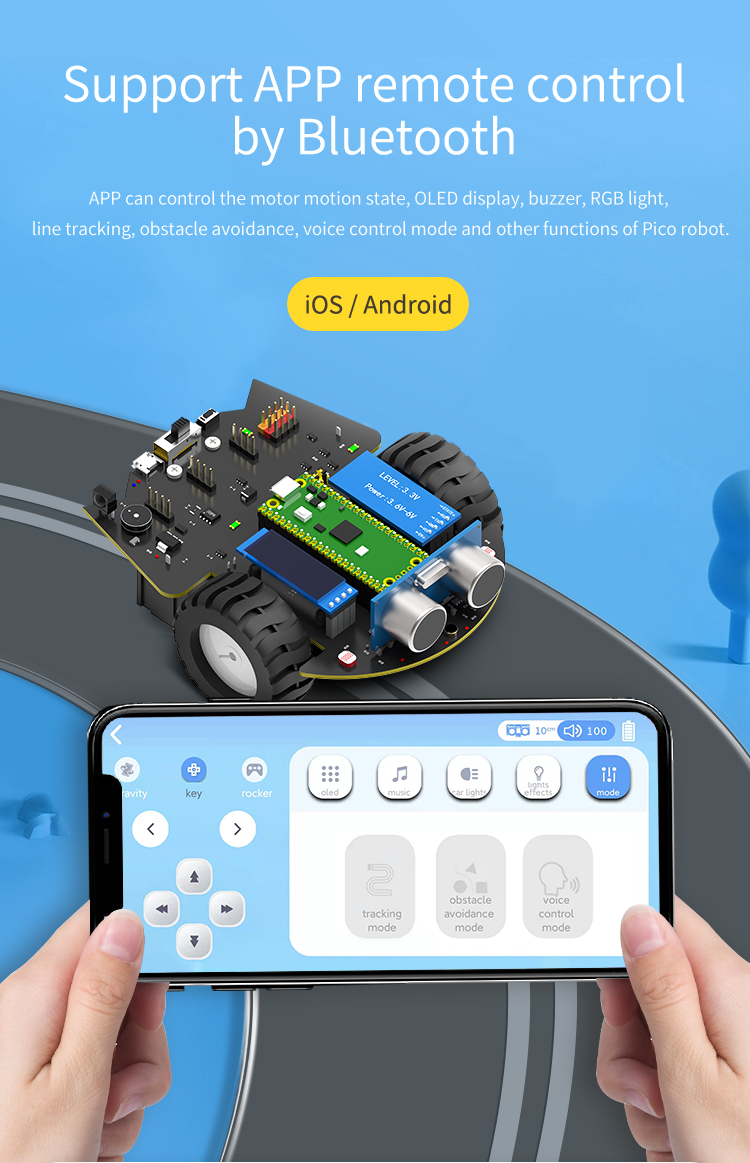
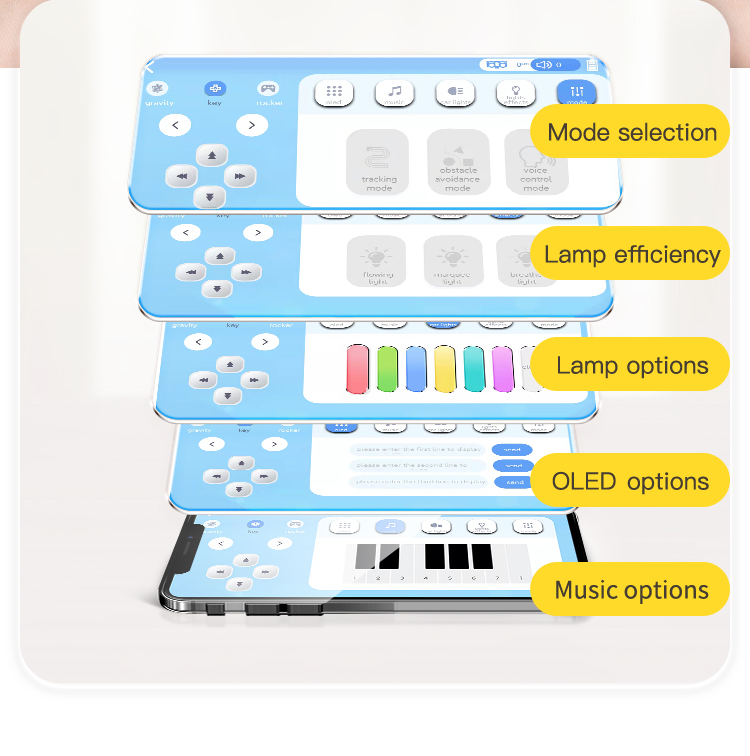
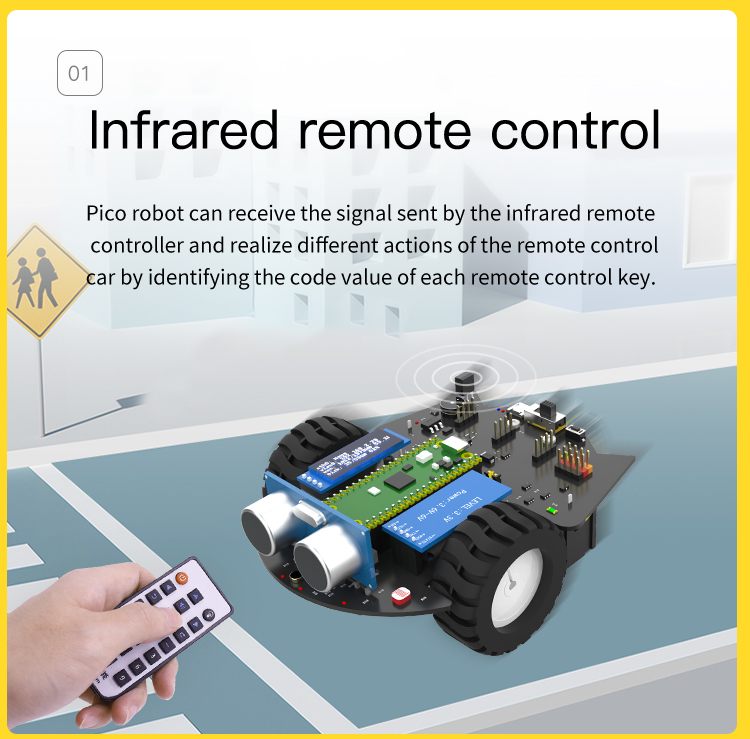
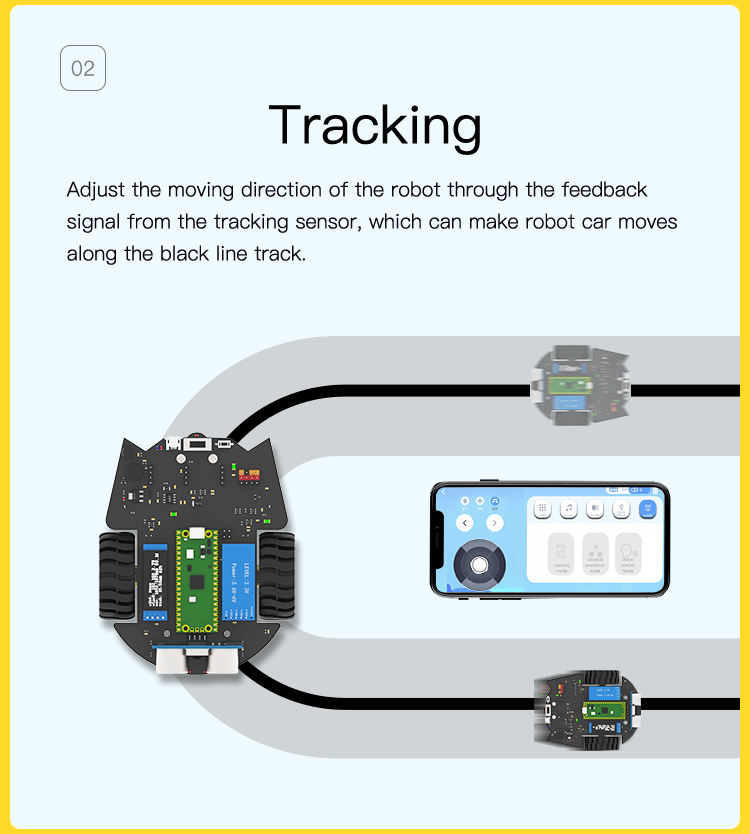
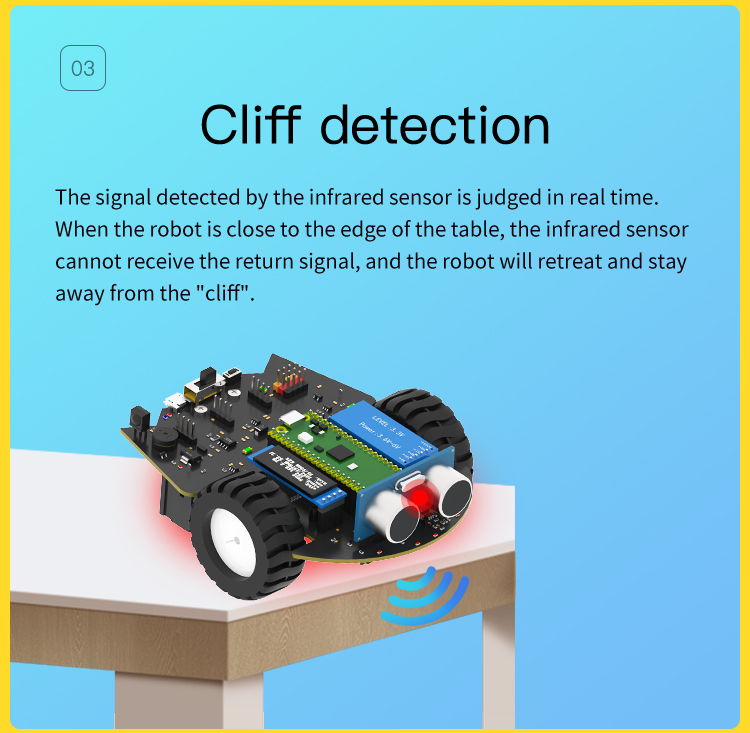
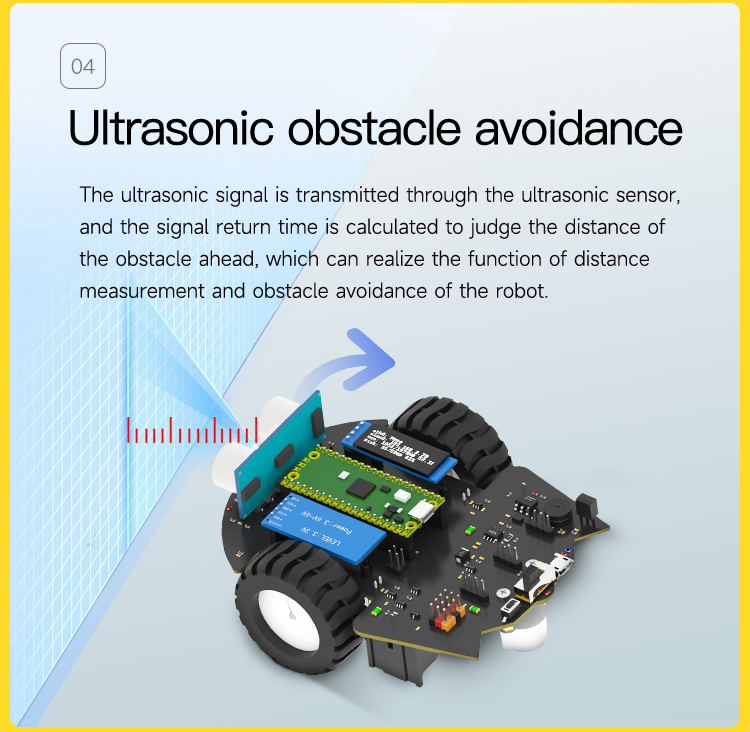
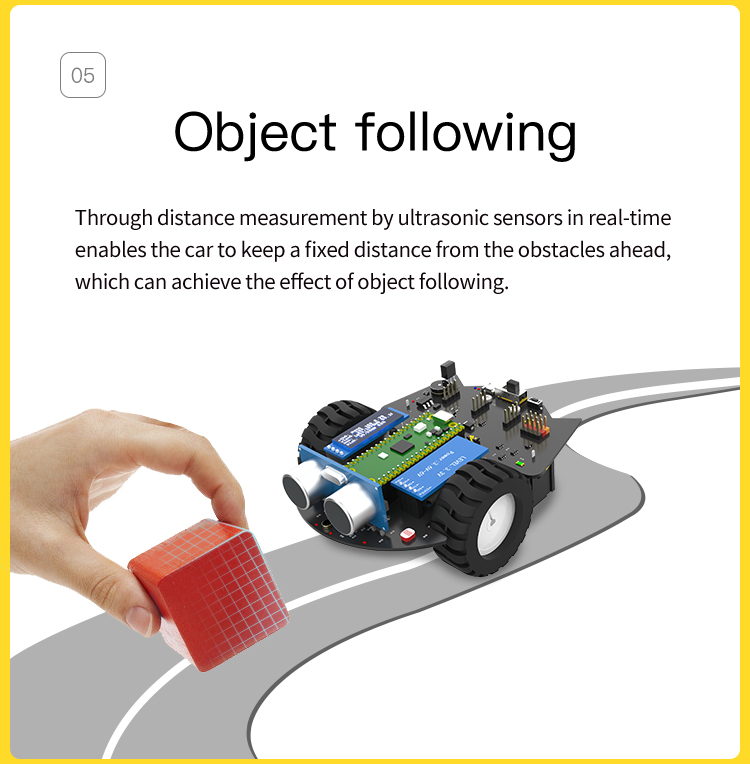
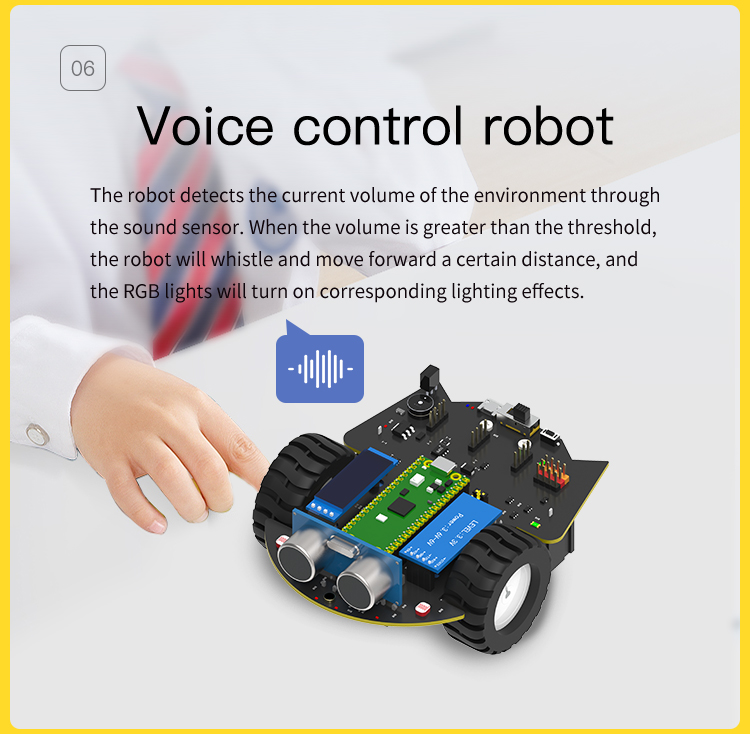
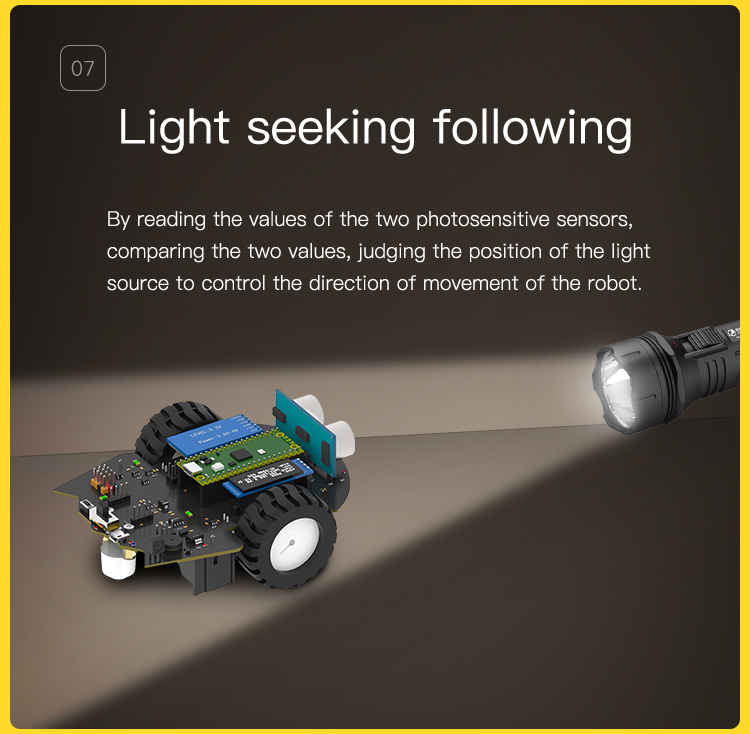
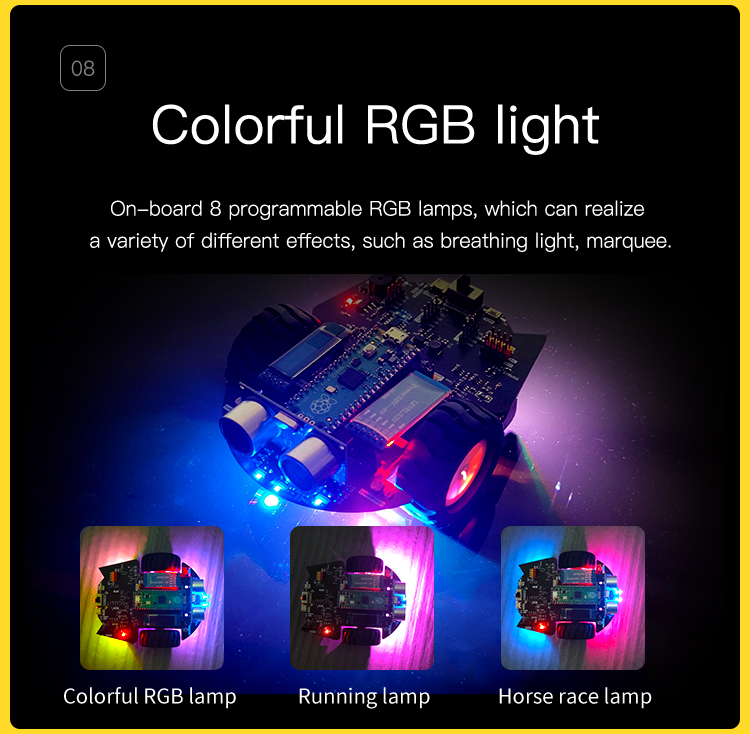
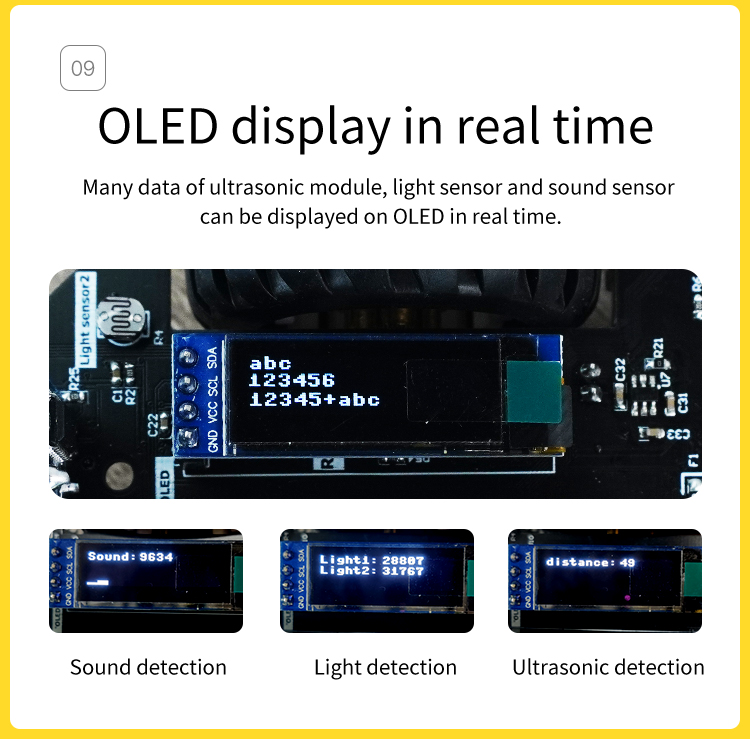
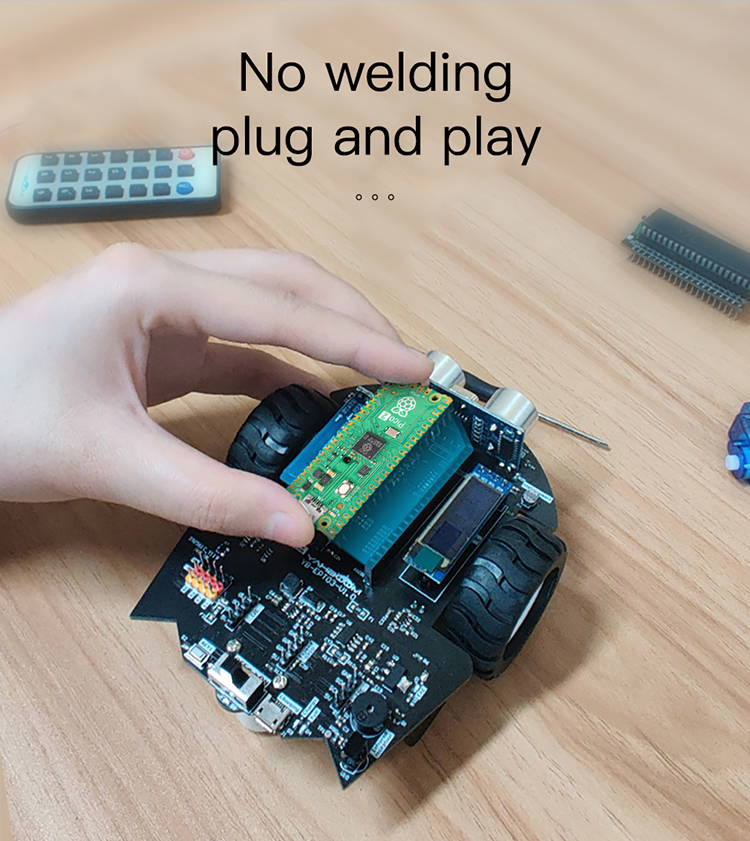
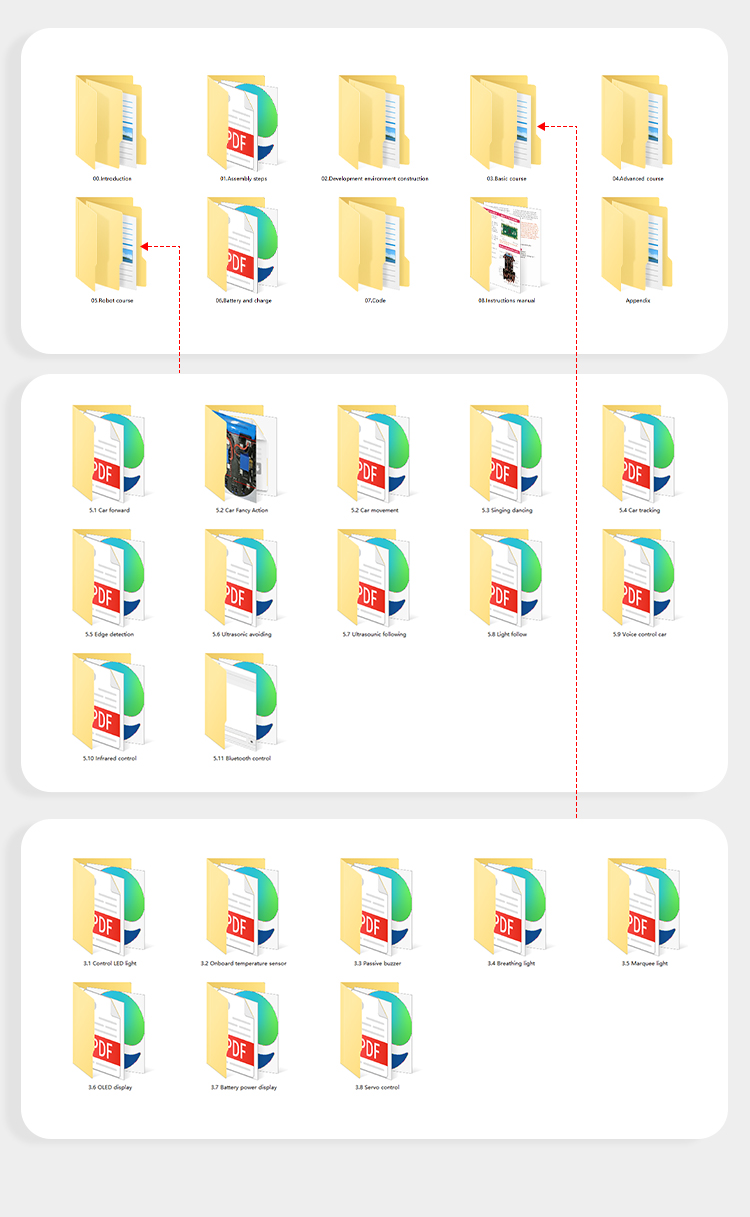
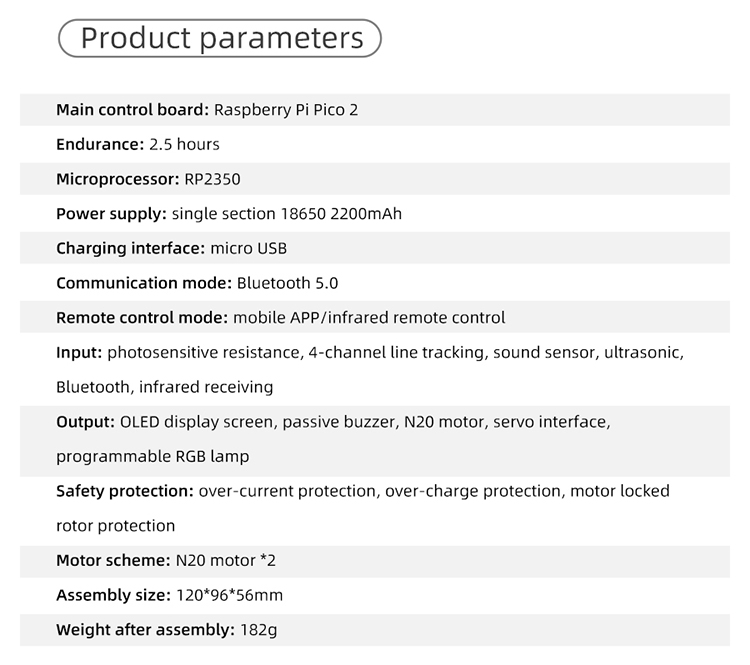
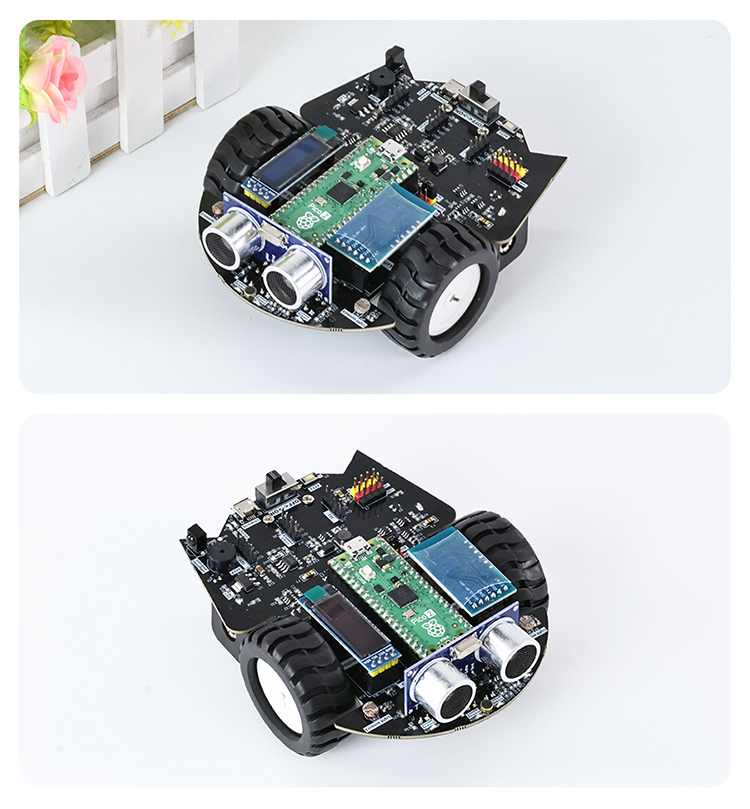
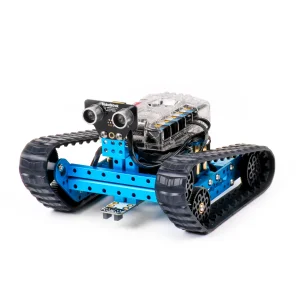
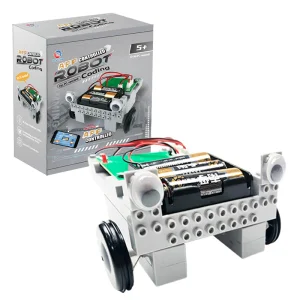
Pico robot is a compact and cost-effective educational programmable 2WD smart car. It is based on Raspberry Pi Pico2, and uses the MicroPython as programming language, combined with on-board sensors, many interesting functions are realized. This robot possess an infrared receiver module, so the user can remotely control it through the infrared remote control or mobile phone APP. We reserve the servo interface, IIC interface, and common pins on the expansion board, which is convenient for users to expand more functions. In addition, we will provide a large number of tutorials and source codes. All in all, this is a good platform for programming beginners, programming education institutions or primary education.
Feature
Small size, reasonable layout, high cost performance.
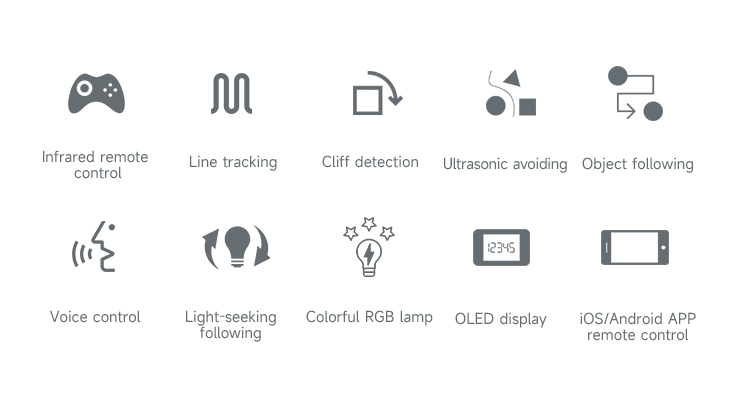
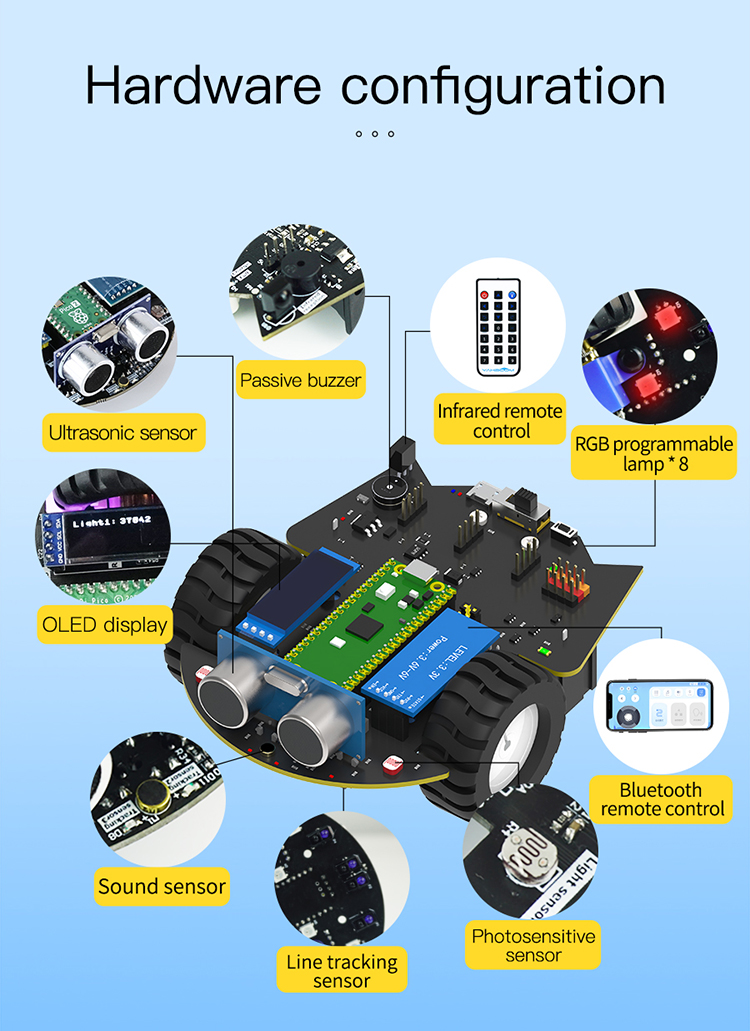
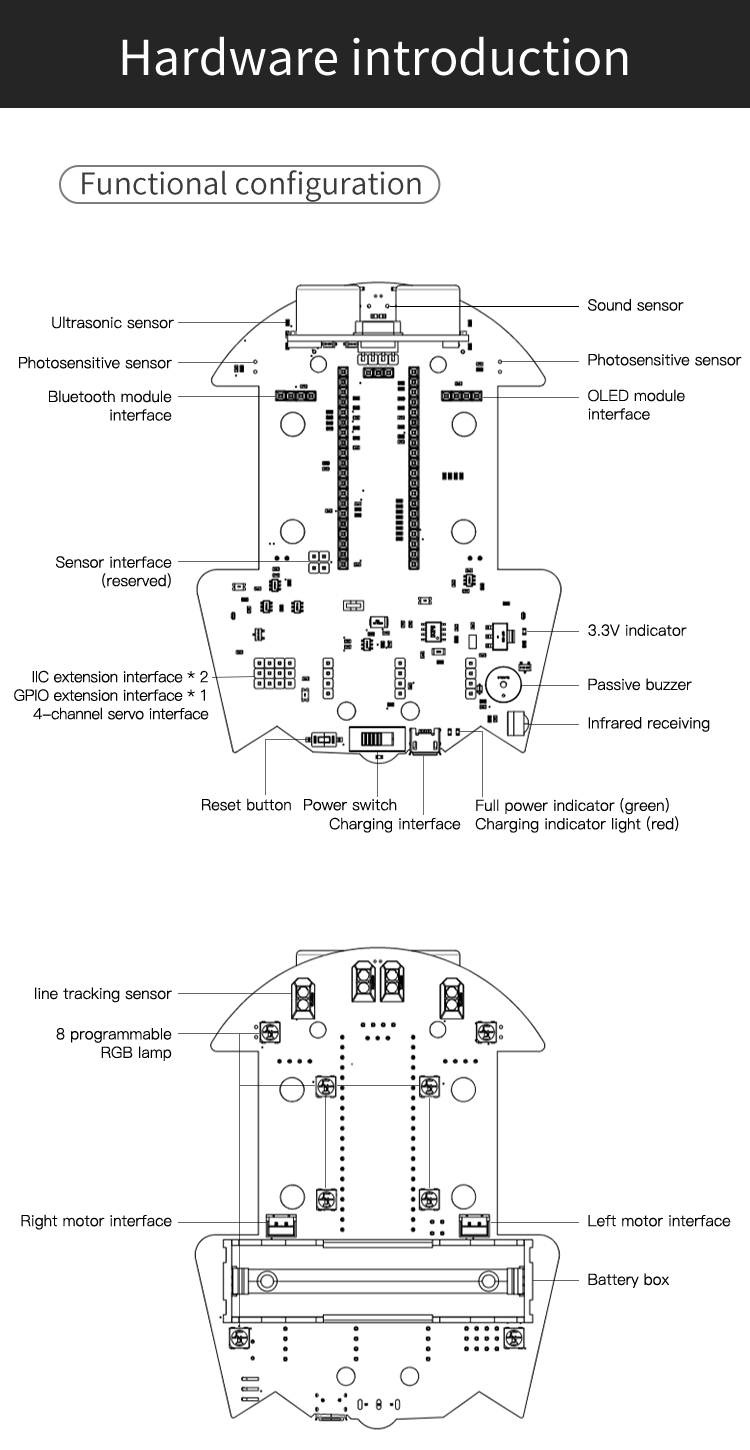
A large number of on-board resources: tracking sensor, ultrasonic, light sensor, sound sensor, buzzer, OLED display, infrared receiver.
MicroPython programming.
Two remote control methods: infrared remote control, mobile phone APP remote control.
A variety of expansion interfaces are reserved: IIC interface, servo interface, GPIO interface.
Details Images
FAQ
What controller is the Pico robot based on?
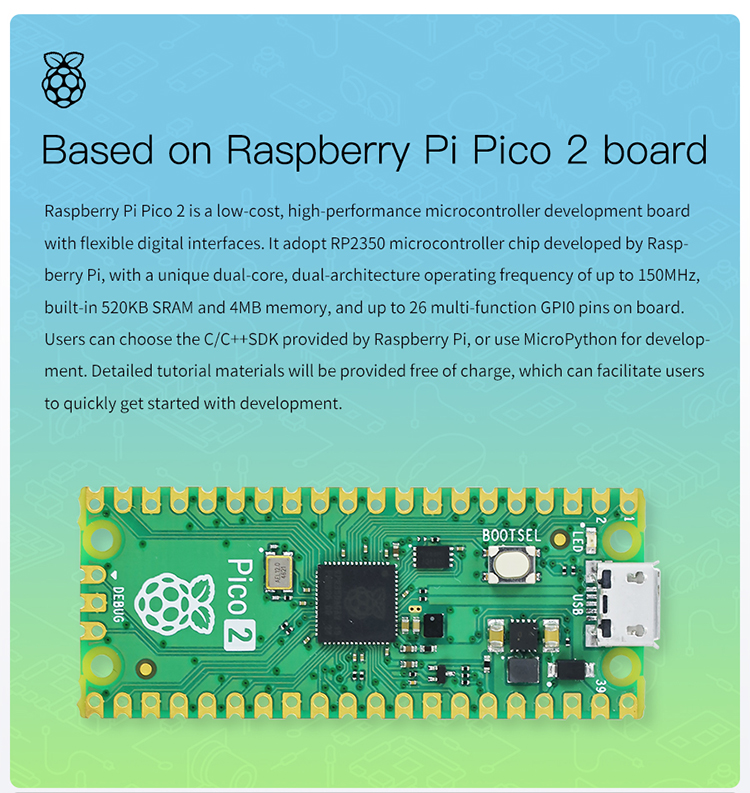
The Pico robot is built on the high-performance Raspberry Pi Pico 2 development board, making it an excellent platform for programmable hardware projects.
Which programming language does the smart car support?
It uses MicroPython as its primary programming language, which is highly recommended for programming beginners and STEM education.
How can I control the Pico smart car?
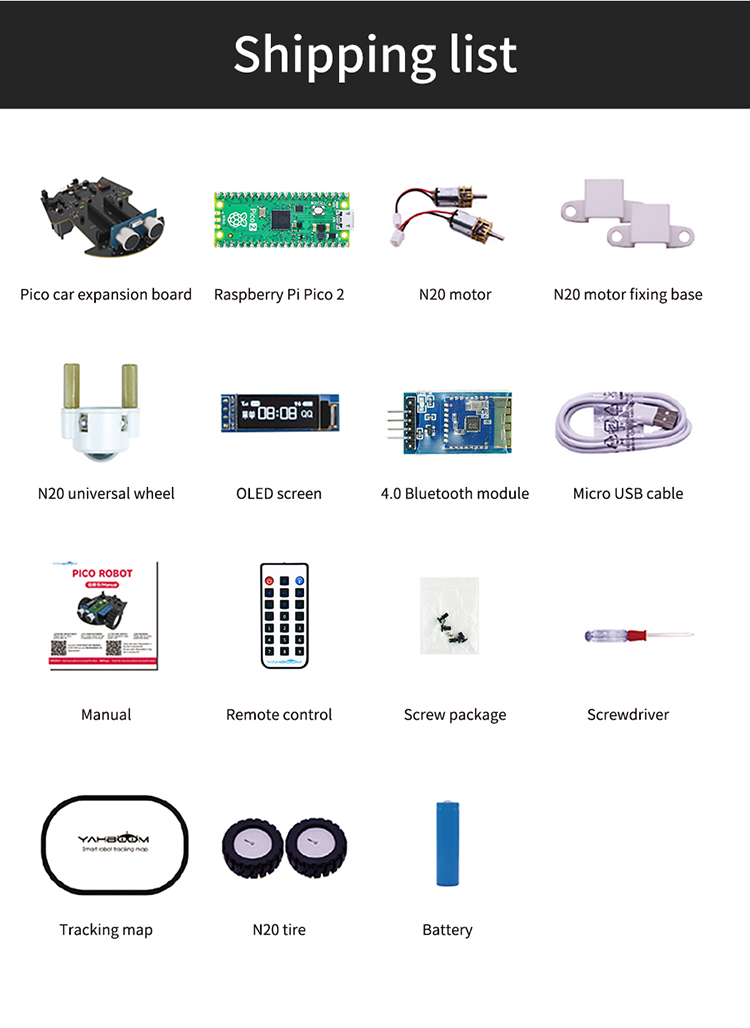
The robot supports two remote control methods: an included infrared remote control or a specialized mobile phone APP.
What on-board sensors are included?
It features tracking sensors, an ultrasonic sensor, light sensor, sound sensor, buzzer, OLED display, and an infrared receiver.
Is this robot expandable for DIY projects?
Yes, the expansion board reserves a variety of interfaces, including an IIC interface, servo interfaces, and GPIO pins, allowing for customized expansions.
 Briy Toys