Raspberry Pi 5 Performance Highlights
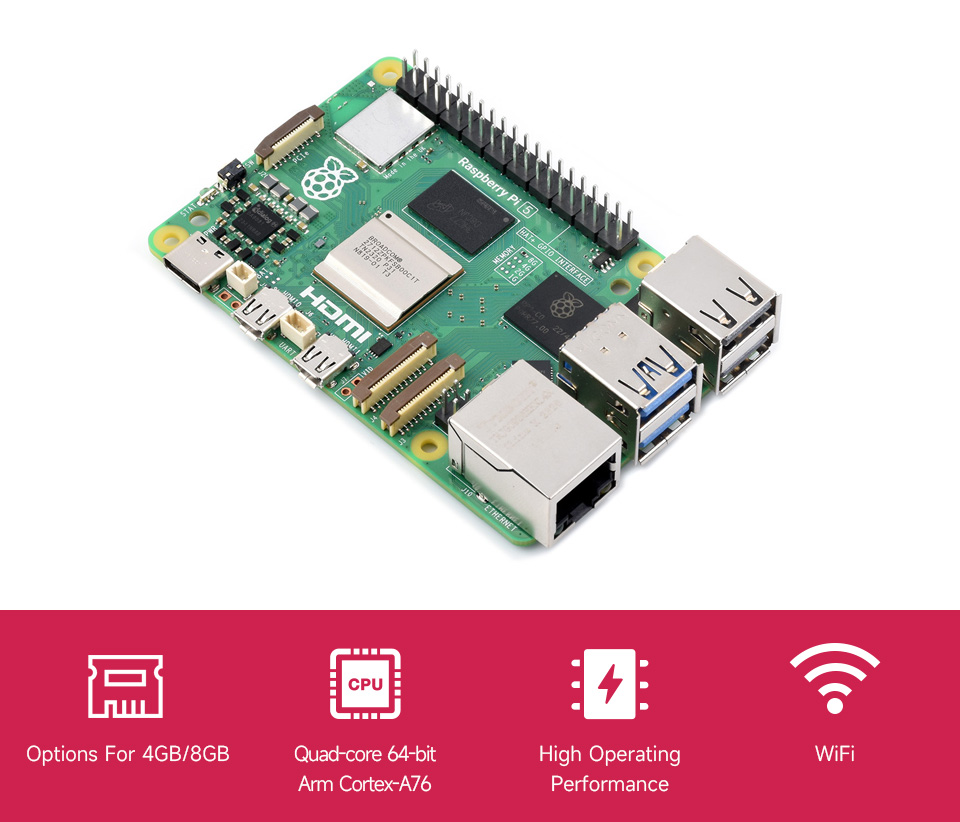
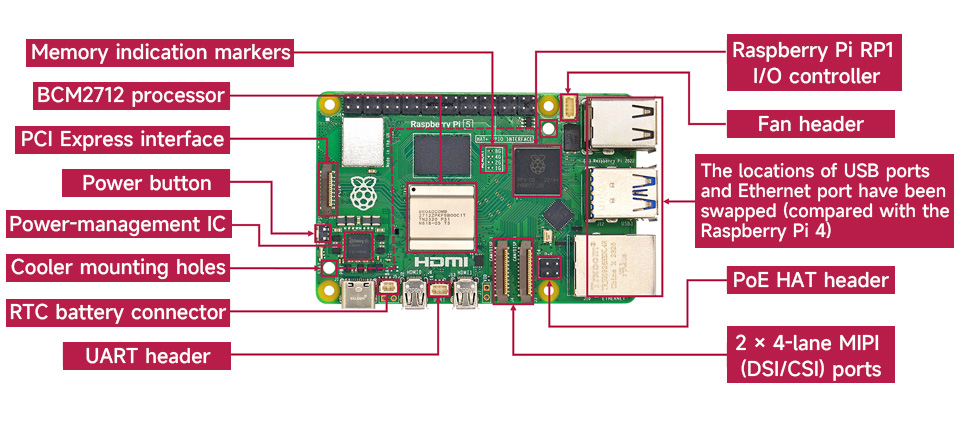
Raspberry Pi 5 is the latest generation flagship product, offering a 2-3x increase in CPU performance over the previous generation. It features dual CSI/DSI ports and USB connectors powered by the in-house RP1 I/O controller.
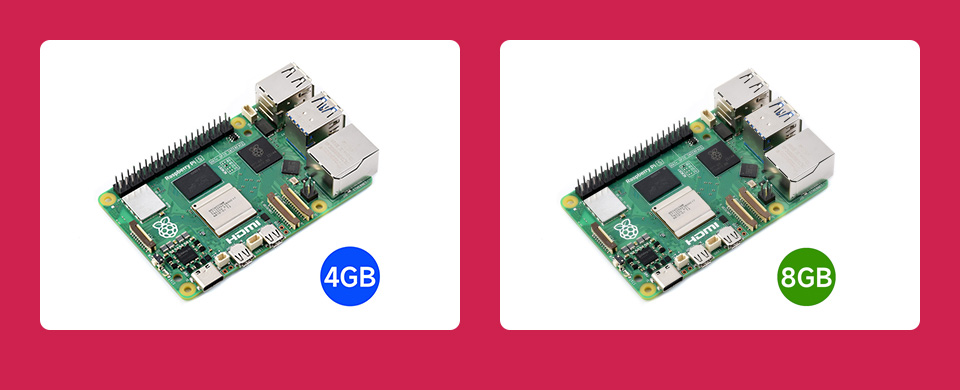
Memory Options
Key Specifications
- 2.4GHz quad-core 64-bit Arm Cortex-A76 CPU
- VideoCore VII GPU @800MHz, supporting OpenGL ES 3.1, Vulkan 1.2
- Dual 4Kp60 HDMI display output and HEVC decoder
- LPDDR4X-4267 SDRAM (4GB/8GB options)
- Dual-band 802.11ac Wi-Fi & Bluetooth 5.0 / BLE
- 2 × USB 3.0 ports (5Gbps) & 2 × USB 2.0 ports
- PCIe 2.0 x1 interface for fast peripherals
- Onboard power button and Real-time clock (RTC)
New Chipset Architecture
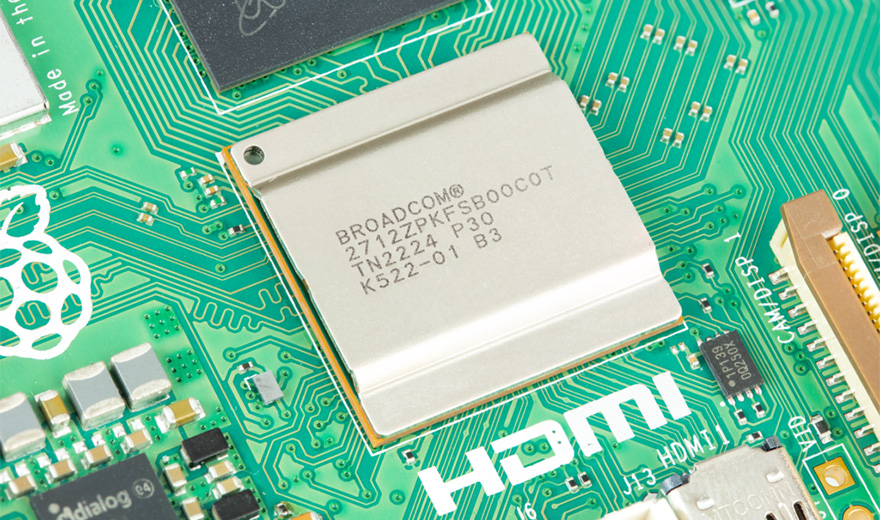
BCM2712: A new quad-core 64-bit Arm Cortex-A76 processor clocked at 2.4GHz. Delivers significant speed increases and lower power consumption.
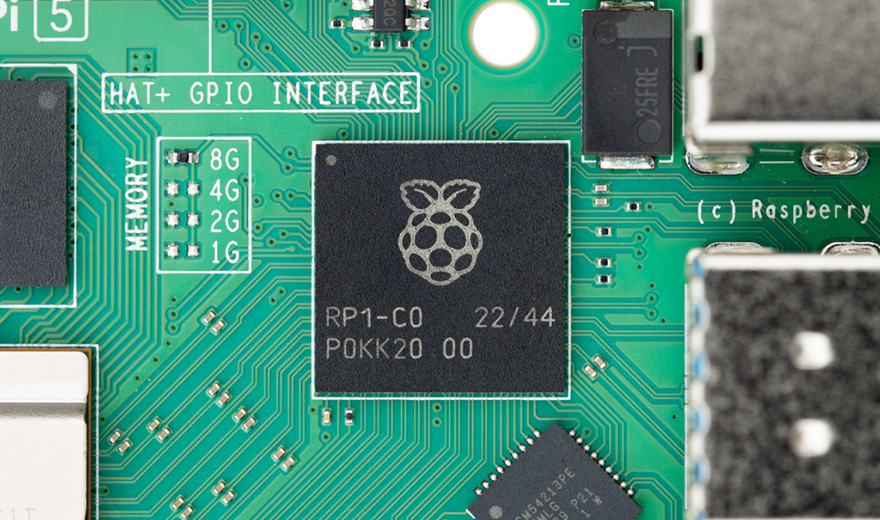
RP1: Custom-designed I/O controller providing Gigabit Ethernet, USB 3.0/2.0 interfaces, and MIPI transceivers for camera/display.
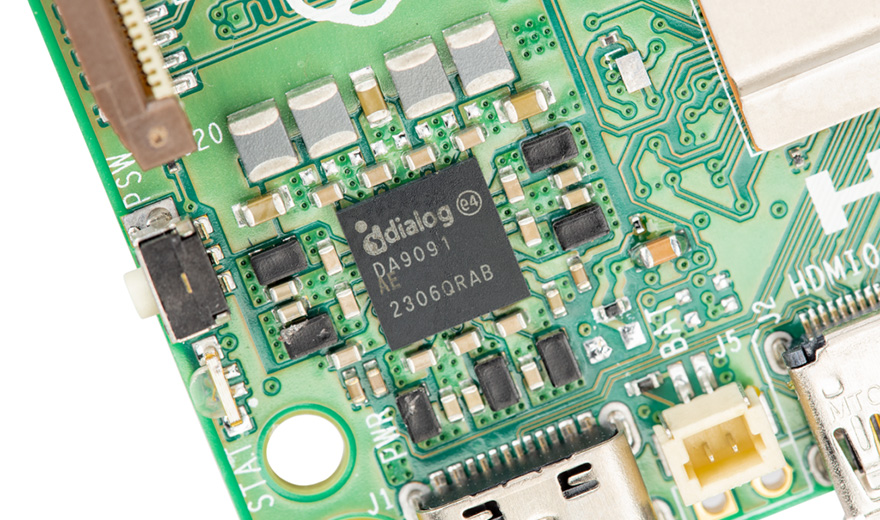
DA9091: Integrated power-management IC (PMIC) generating various voltages, supporting up to 20 amps for the core supplies.
Frequently Asked Questions
1. How much faster is the Raspberry Pi 5 compared to the Pi 4?
The Raspberry Pi 5 provides a 2-3x increase in CPU performance over the Raspberry Pi 4 thanks to the new 2.4GHz quad-core Arm Cortex-A76 processor.
2. What are the available RAM options for the Raspberry Pi 5?
The Raspberry Pi 5 currently offers two high-speed LPDDR4X-4267 SDRAM options: 4GB and 8GB.
3. Does it support dual 4K displays?
Yes, the Raspberry Pi 5 supports dual 4Kp60 HDMI display outputs simultaneously, an upgrade from the previous generation's dual 4Kp30 support.
4. What type of power supply does the Raspberry Pi 5 require?
It requires a 5V/5A DC power supply via USB-C, with support for Power Delivery (PD) to provide optimal performance for high-power peripherals.
5. Can I connect high-speed peripherals like NVMe SSDs?
Yes, the Raspberry Pi 5 includes a PCIe 2.0 x1 interface which allows for fast peripheral connections via a separate M.2 HAT or adapter.
6. Is there a built-in power button?
Yes, the Raspberry Pi 5 features an onboard power button, allowing you to power the device on and off without disconnecting the adapter.
 Briy Toys