Educational toys play a vital role in a child’s development. Parents often wonder, "what are educational toys?" These toys are specifically designed to stimulate learning and enhance cognitive skills. They promote creativity, problem-solving, and critical thinking.
Choosing the right educational toy can be overwhelming. Many options are available, each claiming to be the best. It's important to understand that not all toys labeled as educational truly offer significant learning benefits. Each child has unique interests and developmental needs, demanding thoughtful selection. For example, some children may thrive with puzzle toys, while others might enjoy interactive science kits.
In this guide, we’ll explore the top 10 educational toys worth considering. We’ll also offer insights on what factors to consider when making your choice. This process requires careful consideration, not simply purchasing what’s trendy or popular. Engaging and enjoyable toys can foster a lifelong love for learning, but the perfect selection is essential.
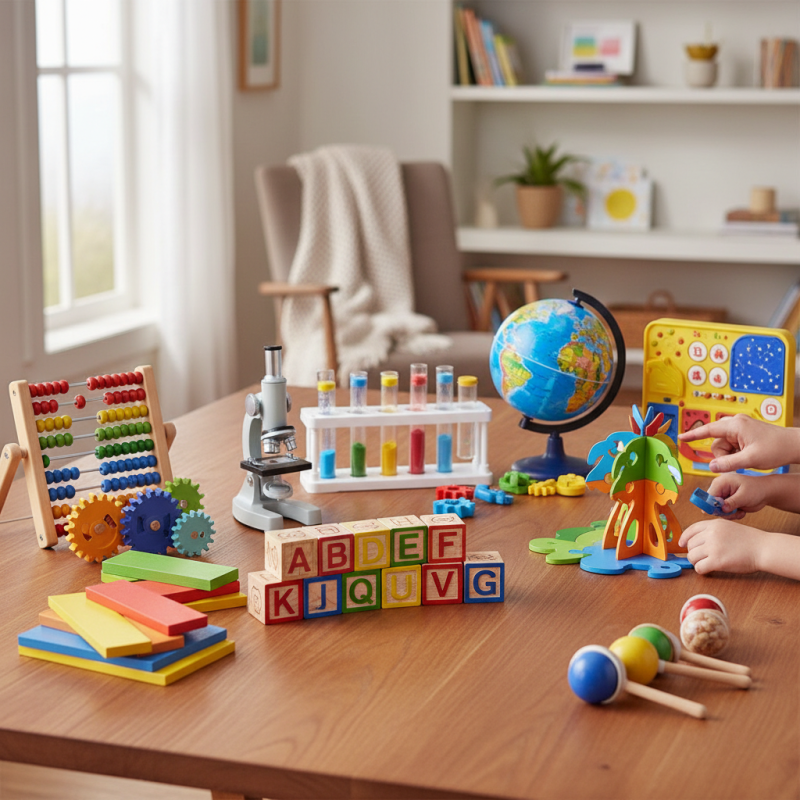
Educational toys play a crucial role in a child's development. They are tools designed to stimulate learning through play. According to a report by the American Psychological Association, 85% of a child's brain develops by age three. This underscores the importance of selecting the right toys during these formative years.
These toys engage children in problem-solving and critical thinking. Research from the Joan Ganz Cooney Center shows that children who play with educational toys demonstrate improved cognitive skills. For instance, toys that encourage creativity—like building blocks—foster spatial awareness. Children learn to understand shapes and sizes while having fun.
Choosing the right educational toy can be challenging. Parents often feel overwhelmed by options. They should consider the child's age, interests, and developmental stage. Data shows that playtime should be balanced. Too much focus on structured play can limit creativity. Meanwhile, too much unstructured play may hinder skill development. Finding a balance is key to maximizing the benefits of educational toys.
| Toy Name | Age Range | Educational Benefits | Key Skills Developed |
|---|---|---|---|
| Building Blocks | 2+ | Encourages creativity and spatial awareness | Motor skills, problem-solving |
| Puzzle Games | 3+ | Improves cognitive skills and memory | Critical thinking, hand-eye coordination |
| STEM Kits | 6+ | Enhances science, technology, engineering, and math skills | Logical reasoning, creativity |
| Musical Instruments | 3+ | Develops auditory skills and rhythm | Coordination, self-expression |
| Art Supplies | 2+ | Promotes creativity and self-expression | Fine motor skills, imagination |
| Science Experiment Kits | 8+ | Encourages exploration and understanding of scientific principles | Analytical thinking, teamwork |
| Robotics Kits | 8+ | Introduces programming and engineering concepts | Problem-solving, technology skills |
| Board Games | 5+ | Enhances social skills and critical thinking | Strategy, cooperation |
| Language Learning Toys | 3+ | Facilitates language development and literacy | Vocabulary, communication |
: Educational toys are designed to stimulate learning through play. They help in a child's development.
They play a crucial role in cognitive skills development during early childhood. Most brain growth occurs before age three.
Toys that promote problem-solving and creativity enhance cognitive abilities. For instance, building blocks improve spatial awareness.
Parents need to consider age, interests, and developmental stages. Finding the right fit is essential.
Yes, excessive structured play can limit creativity. A balance between structured and unstructured play is important.
Eco-friendly and sustainable materials are ideal. They teach children responsibility towards the environment.
Observe how your child interacts with toys. Notice what keeps their attention to make informed choices.
No, not all labeled toys are suitable for every child. Age-appropriate challenges are necessary for effective learning.
Puzzles enhance spatial reasoning. This skill is important for math and science success later in life.
Many parents overlook the importance of observing child interaction. Reflection on these details is crucial for better choices.
Educational toys are designed to facilitate learning through play, incorporating elements that promote cognitive, social, and emotional development in children. They are essential because they not only entertain but also help in reinforcing skills such as problem-solving, creativity, and critical thinking. When considering what are educational toys, it is important to recognize their key features, which include being age-appropriate, engaging, and versatile in their use.
In selecting the right educational toy for your child, parents should adhere to guidelines that consider the child's interests and developmental stage, ensuring the toy is safe and builds on their existing skills. Understanding safety considerations is crucial, as toys should be free from harmful materials and suitable for the child's age group, ensuring both fun and secure play experiences.

 Briy Toys