How Do Educational Toys Help Children With Special Needs?

Time:2026-09-26 Author:Aria
0%

Educational toys can turn everyday play into a practical learning experience for children with special needs. But how educational toys help children with special needs depends on each child’s abilities, preferences, and support goals. A textured puzzle may encourage sensory exploration. A large-button communication toy may support choice-making. A balance game may strengthen coordination while building confidence.

Maria Montessori, a physician and influential educator who worked with children with developmental differences, wrote, “Play is the work of the child.” Her observation remains meaningful today. Well-designed toys can invite children to repeat actions, solve small problems, and express themselves without fear of failure. A child might stack three soft blocks, hear a gentle sound, and try again. That repetition matters.

Still, toys are not automatic solutions. An expensive product may distract rather than teach. A simple container, spoon, or set of fabric squares may create richer learning opportunities. Parents, teachers, and occupational therapists should observe how a child responds. Does the toy reduce frustration? Does it support attention, movement, communication, or social interaction? These questions are more useful than judging a toy by its packaging.

Evidence should guide decisions, but daily experience also matters. A toy that works beautifully in therapy may fail at home because the room is noisy. Another toy may seem ordinary but become a child’s favorite learning tool. This article explores how educational toys help children with special needs, while recognizing an important limitation: progress is individual, gradual, and sometimes difficult to measure. The best choices remain flexible, safe, age-appropriate, and connected to meaningful goals.
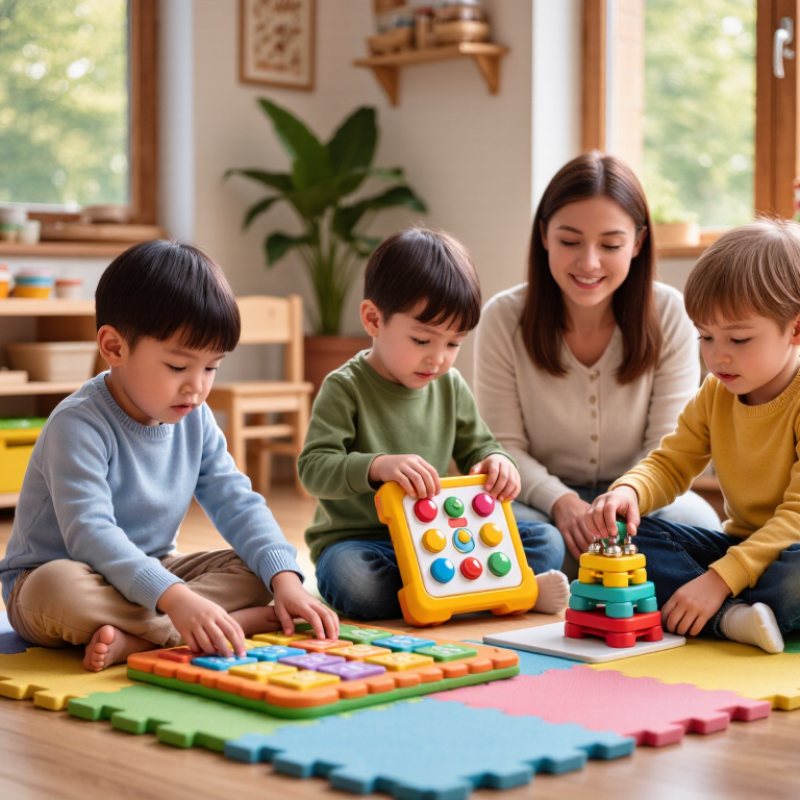
How Do Educational Toys Help Children With Special Needs?

What Educational Toys Are and Why They Matter for Special Needs Children

Educational toys are play materials designed to encourage skills such as communication, problem-solving, movement, or sensory exploration. They can include picture cards, shape sorters, textured objects, simple puzzles, and pretend-play items. The learning is often built into the action: a child matches two shapes, presses a button, or asks for another turn. Play matters.

For children with special needs, a toy can offer a practical way to explore a skill at their own pace. A large-piece puzzle may be easier to grasp than one with tiny parts. A visual matching game can make choices clearer for a child who communicates without speech. Repeating a familiar activity may also help a child feel settled enough to try something new. These benefits vary; a toy is not a treatment or a substitute for professional support.

It is easy to assume a toy is helpful because it is labeled educational. That label alone tells little. Notice what the child reaches for, avoids, or returns to, and consider sound, texture, size, and ease of use. A quieter toy may suit one child, while another enjoys movement and bright colors. Small trials help. So does changing the plan when play becomes frustrating.

How Educational Toys Support Cognitive and Academic Development

Educational toys can make school concepts easier to explore through touch, movement, and repetition. A child who finds counting difficult might place one wooden counter into each cup while saying the numbers aloud. This links spoken number words with visible quantities. Puzzles with shapes or letters can also build visual recognition and problem-solving skills. Small steps matter.

For children with special needs, useful play often has a clear learning goal and room to adapt. A large-grip crayon, for example, may help a child trace letters with less hand strain. Picture cards can support vocabulary, while simple sequencing games can teach patterns and story order. Some children need extra time, fewer pieces, or a quiet space to focus. There is no single toy that works for everyone.

Adults can notice what happens during play: Does the child try again, ask for help, or lose interest? These details can guide the next activity and help connect play with classroom goals. A toy is not a therapy plan. It may support practice, but it cannot replace tailored teaching or professional guidance. Progress may look uneven, and that can be hard to judge. A short note about which tasks felt manageable can help caregivers and educators adjust the next session.

How Play-Based Tools Build Communication and Social Skills

A toy can become a low-pressure reason to communicate. A child may point to a red block, ask for “more,” or offer a doll to a play partner. These small exchanges give adults chances to model words, gestures, turn-taking, and shared attention without demanding eye contact or speech. The American Academy of Pediatrics’ 2018 clinical report, “The Power of Play,” describes play as supporting language, social-emotional development, and relationships. Progress may be quiet.

The need for flexible support is substantial. The CDC’s 2023 autism monitoring report estimated that 1 in 36 eight-year-old children in its study sites had autism. That figure describes monitored communities, not every child or every support need. For children who benefit from predictable routines, simple cause-and-effect toys can invite a clear back-and-forth: press a switch, watch a light, then pause for a response. Picture cards, pretend food, and cooperative games can also create natural chances to request, imitate, or take turns. Keep choices small. Follow the child’s interest, and allow extra time for a response. A toy cannot replace individualized support, and a game that works one day may not work the next. Sometimes the adult talks too much. A quieter pause can leave room for the child’s own signal.

How Adaptive Toys Improve Motor Skills and Sensory Regulation

Adaptive toys can make everyday play easier to enter and easier to repeat. A thick-handled puzzle piece may help a child practise grasping without struggling with a tiny knob. A large button or switch can let a child start a toy with a small, deliberate movement. Reaching, pressing, turning, and releasing build opportunities to practise coordination at the child’s own pace. Small movements count.

Sensory features can also support regulation, though children respond differently. One child may enjoy a soft, ridged surface; another may prefer a smooth object and a quiet corner. Predictable sounds, gentle movement, or simple visual effects can make play feel manageable. Too much stimulation can have the opposite effect. Watch for signs such as turning away, covering ears, or seeking a break, and adjust the activity rather than insisting on completion.

A useful toy is not automatically useful for every child. Offer a choice, keep the play area uncluttered, and notice which adaptations encourage comfortable participation. Progress may look uneven: a child might press a switch independently one day and need help the next. That is worth reflecting on, not treating as failure. Families can discuss fit, positioning, and safety with an occupational therapist or another qualified professional, especially when a toy involves movement, sound, or small parts.

How Do Educational Toys Help Children With Special Needs? - How Adaptive Toys Improve Motor Skills and Sensory Regulation

Developmental area Adaptive toy feature Example play activity How it may help What an adult can observe
Fine motor control Large, easy-to-grasp pieces; chunky handles; simple mechanisms Pick up large counters and place them into a wide container Offers practice with grasping, releasing, and coordinating hand movements. Larger pieces can make the task more accessible for children who find small objects difficult to handle. Whether the child reaches, grasps, releases, or uses both hands; the level of assistance needed
Hand strength and bilateral coordination Stable toys that can be held in one hand while operated with the other Hold a container steady while opening its lid, or pull apart large connecting pieces Creates opportunities to use both hands together and apply controlled force during play. Whether both hands participate and whether the child can adjust force or positioning
Cause-and-effect learning Accessible switches or large buttons with clear, immediate feedback Press a switch to activate a light, sound, or movement Makes the connection between an action and its result easier to notice. Switch access can allow participation when a child has limited reach or dexterity. Whether the child intentionally activates the toy, repeats the action, or anticipates the result
Visual-motor coordination High-contrast targets, clear outlines, and pieces that are easy to position Match large shapes to corresponding openings or place pieces on marked spaces Supports practice looking at a target while guiding a hand toward it. The task can be simplified by using fewer shapes or larger targets. Accuracy, time spent attending to the activity, and whether visual or physical prompts are helpful
Tactile exploration A choice of safe, varied textures, such as smooth, ridged, or soft surfaces Explore texture tiles or sort objects by how they feel Provides a structured way to explore touch. Offering choice and allowing the child to stop can help keep the experience comfortable. Which textures the child chooses, avoids, or tolerates, and whether preferences change over time
Sensory regulation and attention Predictable, low-intensity sensory feedback with adjustable volume or stimulation Use a simple sensory toy during a planned play break, then return to a familiar activity May provide an engaging, predictable activity. Responses to sound, movement, or light vary between children, so intensity and duration should be adjusted to the individual. Signs of comfort or distress, ability to remain engaged, and how the child transitions afterward
Communication and turn-taking Simple games with clear turns, visual choices, or objects that can be requested Take turns placing pieces, or choose between two items using speech, gesture, or a communication aid Creates natural opportunities to communicate preferences, request a turn, and share attention without requiring one specific communication method. How the child signals choices, initiates interaction, responds to a partner, or indicates “finished”
Task sequencing and independence Activities with a small number of visible steps and pieces that are easy to organize Complete a simple posting or sorting activity, then put the pieces into a container Allows practice following a sequence and completing a task. Steps can be shown with gestures, pictures, or brief verbal cues. Which steps the child completes independently and which prompts support participation

Note: These are practical examples, not guaranteed outcomes or clinical measures. Choose toys based on the child’s abilities, preferences, and safety needs; supervise play and consult the child’s occupational therapist or other qualified professional when guidance is needed.

How to Choose Safe and Suitable Educational Toys

Choosing educational toys for children with special needs begins with the child, not the diagnosis. Notice what holds their attention: a textured puzzle piece, a large button, or a toy that responds to a gentle press. Select activities that match current motor, communication, and sensory needs, while leaving room for challenge. A toy that is too difficult may frustrate; one that is too simple may quickly lose appeal. No checklist gets every choice right.

Safety matters just as much as learning value. Check age guidance, construction, cleaning instructions, and whether parts could become choking hazards if a child mouths objects. The U.S. Consumer Product Safety Commission estimated 209,500 toy-related emergency-department injuries among children aged 14 and younger in 2022. This figure covers many types of toys and injuries; it does not mean every toy is unsafe. Still, inspect seams, batteries, and loose pieces regularly. When possible, ask the child’s occupational therapist or educator about grip size, sound level, and safe ways to adapt play.

Tips: Try one toy together before buying several. Watch for discomfort, repeated frustration, or joyful focus. Choose washable, sturdy pieces, and reassess as the child’s skills and preferences change.

FAQS

What are educational toys for children with special needs?

They are play materials that encourage communication, movement, problem-solving, or sensory exploration. Examples include picture cards, textured objects, and large-piece puzzles.

How can toys support communication?

A child might point to a red block, request “more,” or offer a doll. These small exchanges create chances to model words and gestures. Pause, too.

Which toys can encourage turn-taking?

Simple cause-and-effect toys can make back-and-forth play clear. A child presses a large button, watches a light, then waits for another turn.

How should I choose a suitable toy?

Watch what the child reaches for, avoids, or returns to. Consider grip size, sound, texture, and current communication or movement needs.

What if a toy feels too difficult?

A puzzle with tiny pieces may frustrate a child who finds larger pieces easier to hold. Try a simpler activity, then adjust gradually.

Do educational toys replace professional support?

No. Toys can offer practice and enjoyable play, but they are not treatment or a substitute for individualized professional support.

What safety details should I check?

Review age guidance, cleaning instructions, seams, batteries, and loose parts. If a child mouths objects, check carefully for small pieces.

How can I tell whether a toy is working well?

Look for joyful focus, attempts to communicate, or relaxed repetition. Stop or change the activity if discomfort or repeated frustration appears. My first guess may be wrong.

Conclusion

Educational toys can make learning more accessible and enjoyable for children with special needs by matching activities to their abilities, interests, and pace. They can encourage cognitive and academic development through hands-on practice with concepts such as shapes, numbers, colors, memory, and problem-solving. Because children can explore and repeat activities without pressure, these toys may help build confidence, curiosity, and independence.

Play-based tools can also create opportunities to practice communication, turn-taking, cooperation, and other social skills. Adaptive toys, including options with easy-to-grip parts or adjustable sensory features, can support fine and gross motor practice while helping children manage sensory experiences. Choosing suitable toys involves considering a child’s age, developmental needs, preferences, and safety, as well as whether the toy is durable, easy to use, and appropriate for supervised play. Together, these considerations show how educational toys help children with special needs learn, connect, and participate in ways that feel supportive and rewarding.

Aria

Aria

Aria is a dedicated marketing professional with a deep passion for innovative strategies and a keen understanding of our company's product offerings. With a wealth of experience in the industry, Aria excels at crafting engaging content that highlights the unique features and benefits of our......