How China Best Educational Toys Boost Brain Development?

Time:2026-09-06 Author:Ethan
0%

China’s best educational toys are not simply colorful products with clever labels. Their value depends on how children use them, what skills they encourage, and whether adults support meaningful play. A wooden building set, for example, can turn scattered pieces into a bridge, a tower, or an unexpected failure. That small failure matters.

Understanding how educational toys affect brain development requires more than repeating marketing claims. Developmental psychologist Kathy Hirsh-Pasek has said, “Play is not the opposite of learning; it is the way children learn.” Her research emphasizes active engagement, social interaction, curiosity, and purposeful exploration. These elements can strengthen problem-solving, language, spatial reasoning, memory, and flexible thinking. However, one toy cannot develop every ability at once. That assumption deserves careful reconsideration.

Well-designed Chinese educational toys may offer practical advantages through tactile materials, open-ended challenges, and culturally familiar themes. Puzzle boards can support visual planning. Building blocks can encourage early engineering concepts. Role-play sets can help children practice communication and emotional understanding. The strongest evidence usually concerns play experiences, not a product’s country of origin. Parents and educators should therefore examine safety, age suitability, material quality, and the child’s actual response. A toy that remains untouched is not automatically educational.

This article explores the science, design features, and everyday experiences behind brain-supportive toys. It also considers the limits of current research, because child development is complex. Good toys create possibilities. Children create the learning.
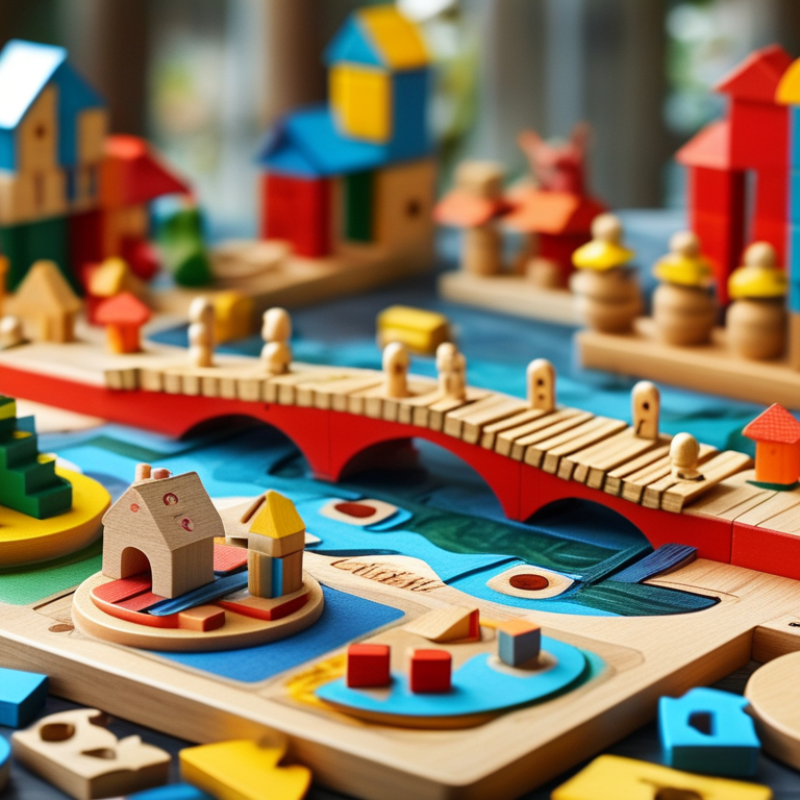
How China Best Educational Toys Boost Brain Development?

What Makes Educational Toys Effective for Brain Development

Effective educational toys do more than keep children busy. They create small problems that require attention, memory, movement, and choice.

A puzzle with uneven pieces encourages children to rotate, compare, and try again. A building set turns a loose idea into a visible structure. These actions support executive function, especially working memory and self-control.

Research supports this design approach, although the evidence is not perfect. A 2022 systematic review in Child: Care, Health and Development examined 39 studies involving more than 3,000 children. It found that child-directed play may improve cognitive, social, emotional, and physical development.

However, the researchers rated much of the evidence as low certainty. Educational toys are not magic.

The American Academy of Pediatrics also stresses open-ended play and adult interaction in its 2016 clinical report. A caregiver asking, What could make this tower stronger? adds language and reasoning practice.

Quality matters too. Effective toys should match a child’s age, offer more than one solution, and allow repeated attempts. In my experience, simple materials often produce deeper play than crowded features.

This is not always obvious. A colorful toy can look educational while demanding very little thinking. Designers should test how children actually use it, not only how the packaging describes it.

(American Academy of Pediatrics, 2016; Skene et al., 2022)

How China’s Educational Toys Support Different Learning Skills

How China’s Educational Toys Support Different Learning Skills

China’s educational toys increasingly combine play with practical learning goals. A shape puzzle can strengthen spatial awareness, hand control, and early problem-solving skills. Children rotate a wooden triangle, test the opening, and adjust their grip. These small actions make abstract ideas feel physical and understandable.

Construction sets support planning, balance, and flexible thinking. A child may build a bridge, watch it collapse, and try a wider base. That failed attempt still teaches useful information. Language-focused toys can introduce sounds, colors, and simple storytelling. When children describe a toy kitchen meal, they practice vocabulary, sequencing, and social communication. Cooperative games also encourage turn-taking and emotional control. These skills matter in classrooms and everyday situations.

Teachers and caregivers should observe how a child uses each toy, rather than trusting its label. A highly advanced puzzle may create frustration instead of curiosity. My first assumption was that more pieces meant deeper learning. In practice, the right challenge depends on age, attention, and confidence. Safe materials, smooth edges, clear instructions, and age-appropriate design remain essential. Adults can ask open questions, such as “What could make it stronger?” They should avoid solving every problem too quickly. Quiet observation often reveals more than constant instruction.

How China’s Educational Toys Support Different Learning Skills

This chart compares the number of core learning-skill areas commonly engaged by different educational toy types. The categories include problem-solving, planning, communication, creativity, fine-motor control, spatial reasoning, numeracy, attention, sequencing, and self-regulation. The values represent the breadth of skills supported, not measured learning gains.

Key Types of Brain-Boosting Educational Toys from China

How China Best Educational Toys Boost Brain Development?

China’s educational toy sector offers varied tools for different stages of brain development. Building sets strengthen spatial reasoning through blocks, gears, bridges, and simple mechanical parts. Children can test balance, rebuild failed structures, and discover basic engineering principles. Puzzles support memory, visual processing, and flexible thinking. Matching cards and pattern boards work well for younger learners. Coding toys introduce sequencing through buttons, sensors, or screen-free commands. They make abstract logic more tangible. Role-play kits also matter. A toy kitchen, clinic, or market encourages language, planning, and social problem-solving.

Tips: Choose toys that match the child’s age and current abilities. Look for clear instructions, durable materials, and smooth edges. Check safety information and independent quality testing where available. Give children time to struggle before offering help. That pause can be productive. Adults should ask, “What could you try next?” instead of solving everything. Rotate toy types weekly to prevent boredom and encourage broader skills.

Not every colorful toy creates meaningful learning. Some products advertise intelligence gains without strong evidence. A flashing toy may entertain, but entertainment alone is not development. I have also found that overly difficult puzzles can reduce confidence quickly. Better choices allow small wins, visible progress, and repeated practice. Parents and teachers should observe how children actually use each toy. Their behavior may differ from the product description. This reflection helps families select useful materials rather than simply buying more.

How China Best Educational Toys Boost Brain Development? - Key Types of Brain-Boosting Educational Toys from China

Evidence-informed comparison of common educational toy categories manufactured in China

Toy Category Typical Formats Recommended Age Primary Brain Skills How It Supports Development Suggested Play Activity Safety and Selection Points
Building and Construction Toys Interlocking blocks, magnetic tiles, gears, engineering sets 3–12+ years, depending on piece size and complexity Spatial reasoning, planning, problem-solving, working memory, fine-motor control Children mentally rotate pieces, test stability, plan sequences, and adjust designs after failure. Build a bridge that holds a specified number of objects, then redesign it using fewer pieces. Check for secure connections, durable materials, rounded edges, and age-appropriate parts. Keep small pieces away from children under 3.
Puzzles and Logic Games Jigsaw puzzles, tangrams, maze boards, pattern challenges, Sudoku-style games 3–14+ years Visual analysis, attention, reasoning, persistence, cognitive flexibility Matching shapes and identifying rules requires sustained attention and flexible strategy selection. Ask the child to explain why each piece belongs in a particular position instead of focusing only on speed. Select a challenge that is achievable but not frustrating. Use thick, non-toxic pieces for younger children.
Early Mathematics Toys Counting bears, number tiles, abacuses, sorting sets, fraction or geometry manipulatives 3–10 years Number sense, classification, comparison, sequencing, symbolic thinking Hands-on objects help children connect quantities and actions with mathematical symbols and language. Sort objects by color, size, or shape, then count each group and compare which group has more. Pieces should be easy to distinguish, washable, and large enough for the intended age group.
Science and STEM Kits Simple circuits, balance kits, pulley sets, magnets, mechanics and nature-experiment kits 6–14+ years Causal reasoning, hypothesis formation, observation, measurement, analytical thinking Children make predictions, conduct controlled trials, observe results, and revise explanations. Change one variable at a time, record the result, and discuss why the outcome changed. Avoid kits involving heat, mains electricity, sharp tools, or chemicals unless supervised by an adult.
Coding and Robotics Toys Screen-free coding cards, programmable robots, sensor kits, block-based coding devices 5–14+ years Sequencing, decomposition, debugging, executive function, computational thinking Breaking a task into steps and correcting errors strengthens planning and systematic problem-solving. Program a device to navigate a simple grid while using the fewest commands possible. Review battery compartments, privacy settings, app permissions, wireless functions, and the availability of offline play.
Language and Literacy Toys Alphabet tiles, phonics cards, word-building games, storytelling cards, picture-word matching sets 3–9 years Vocabulary, phonological awareness, memory, sequencing, communication Interactive discussion and word manipulation provide practice with sounds, meanings, sentence structure, and narrative order. Create a short story using three picture cards, then retell it in a different sequence. Use clear print, accurate language, culturally appropriate images, and durable cards with rounded corners.
Art, Music and Creative Toys Drawing boards, modeling materials, rhythm instruments, music composition sets, craft kits 2–12+ years Creative thinking, motor coordination, auditory discrimination, self-expression, attention Open-ended creation encourages experimentation, sensory integration, planning, and communication of ideas. Invite children to create a repeating rhythm, draw a solution to a problem, or build a model from recyclable materials. Choose non-toxic, washable materials and avoid loose powders, sharp tools, and parts that can break into small pieces.
Memory and Strategy Games Matching games, board games, route-planning games, turn-taking strategy games 4–12+ years Working memory, inhibition, decision-making, social cognition, emotional regulation Remembering rules, waiting for turns, evaluating choices, and coping with outcomes exercise executive and social skills. After each round, ask players to describe one decision they made and one alternative they could have tried. Prefer simple, readable instructions and cooperative options for younger children or group settings.
Montessori-Style Practical-Life Toys Lacing boards, transfer activities, dressing frames, graded shape and size materials 2–6 years Fine-motor precision, concentration, independence, sequencing, visual discrimination Repeated purposeful actions strengthen hand–eye coordination and encourage children to monitor their own performance. Demonstrate the task slowly, allow independent repetition, and gradually reduce assistance. Ensure smooth surfaces, secure fasteners, non-toxic finishes, and components that cannot create a choking hazard.
Important note: Toy benefits depend on age-appropriate design, regular active play, adult interaction, and the child’s own interests. Educational toys support development but do not replace conversation, reading, outdoor activity, or hands-on social experiences. Always follow the applicable safety labeling and inspection requirements for the destination market.

How to Choose Age-Appropriate Educational Toys

Choosing age-appropriate educational toys matters more than choosing the most expensive option. A toy should match a child’s motor skills, attention span, language level, and curiosity. Age labels provide useful guidance, but they are not perfect predictions. Children develop at different speeds.

For infants, choose large, washable pieces with simple textures and gentle sounds. Avoid small parts, loose magnets, and accessible button batteries. Toddlers often benefit from stacking cups, chunky puzzles, and sorting games. These activities build hand control and early problem-solving. Keep it simple. For preschoolers, pretend-play sets, pattern blocks, and beginner science tools can support language, memory, and flexible thinking. The toy should offer a small challenge without creating repeated frustration.

I once chose a puzzle marked for an older age because it looked more educational. My child quickly lost interest. That experience changed how I evaluate toys. Watch how a child plays, then adjust the difficulty. For school-age children, construction kits, logic games, and open-ended art materials can encourage planning and independent thinking. Check whether instructions are clear, materials are durable, and safety information is traceable. Products made in China can be suitable choices when they provide reliable age guidance, tested materials, and responsible manufacturing details. A toy does not teach by itself. Adult conversation, patient play, and occasional mistakes often create the deeper learning.

Ways to Use Educational Toys for Better Learning Outcomes

How China’s Best Educational Toys Boost Brain Development

Educational toys made in China can support learning when adults use them with clear goals. The toy itself is not the teacher. A child’s actions, questions, and mistakes create the learning experience. For example, use a wooden sorting set to practice color names, counting, and simple classification. Ask, “Why does this piece belong here?” Then wait before offering help. This small pause encourages reasoning and language development. Keep it simple.

For better learning outcomes, match each activity with the child’s age and current ability. Begin with ten focused minutes, then extend the session if interest remains. Rotate puzzles, building pieces, matching cards, and pretend-play tools during the week. This prevents boredom and gives the brain different problems to solve. Sit nearby, but avoid correcting every move. Let children struggle. That matters.

From practical home use, open-ended toys often create richer conversations than toys with only one correct answer. Still, some activities may be too difficult or poorly explained. I have seen children lose interest when instructions were rushed. A better approach is to demonstrate one example, allow free exploration, and observe quietly. Record what the child can do independently, such as completing a pattern or explaining a choice. These observations help parents and educators adjust the next activity. Progress may look uneven, and that is normal.

FAQS

: Which educational toys can support brain development?

: Building sets develop spatial reasoning through blocks, gears, bridges, and balance challenges. Puzzles strengthen memory and visual processing. Coding toys introduce sequencing through buttons, sensors, or screen-free commands. Role-play kits support language, planning, and social problem-solving.

How do building toys help children learn?

Children test structures, notice failures, and rebuild them. A bridge that collapses becomes a useful lesson. These activities introduce balance, space, and simple engineering ideas.

Are puzzles suitable for every child?

No. Puzzle difficulty should match the child’s current ability. Small successes build confidence. Overly difficult puzzles may cause quick frustration. Observe the child, rather than trusting the package description completely.

How can adults use sorting toys effectively?

Ask children to sort pieces by color, shape, or size. Then ask, “Why does this piece belong here?” Wait before helping. That pause encourages reasoning and language development.

How long should a learning activity last?

Begin with about ten focused minutes. Continue only while interest remains. Short sessions often work better than forced practice. Progress may look uneven.

Should adults correct every mistake?

No. Let children struggle safely before offering suggestions. Ask, “What could you try next?” Demonstrate one example when needed. Solving everything may reduce independent thinking.

Are colorful or flashing toys automatically educational?

No. Bright lights can entertain without building useful skills. Learning depends on the child’s actions, questions, and practice. Some advertising claims lack strong evidence. Results are not guaranteed.

How should families choose safer educational toys?

Match the toy with the child’s age and abilities. Look for clear instructions, durable materials, and smooth edges. Review safety information and independent quality testing when available. Details still need checking.

Why rotate different toy types?

Rotate puzzles, building pieces, matching cards, and role-play tools weekly. Different toys present different problems. Rotation can reduce boredom and broaden practice. However, some children may prefer repetition.

How can parents measure learning progress?

Observe what the child completes independently. Record pattern-making, counting, explanations, and problem-solving attempts. Children may use toys differently from product descriptions. That difference deserves reflection.

Conclusion

China’s educational toys can support brain development by turning learning into active, enjoyable practice. The question of how educational toys affect brain development is closely connected to hands-on exploration, problem-solving, memory, language, creativity, and social interaction. Well-designed puzzles, building sets, counting toys, science kits, art materials, and role-play products encourage children to think independently, test ideas, recognize patterns, and develop fine motor skills. These toys can also support different learning styles by combining visual, physical, and verbal activities.

Choosing age-appropriate toys is essential for maintaining interest and ensuring a suitable level of challenge. Parents and teachers should consider a child’s safety, abilities, interests, and developmental needs rather than focusing only on appearance. To achieve better learning outcomes, adults can play alongside children, ask open-ended questions, encourage experimentation, and connect toy activities with everyday situations. With regular guidance and balanced use, educational toys from China can make learning more engaging while helping children build cognitive, emotional, and practical skills.

Ethan

Ethan

Ethan is a seasoned marketing professional with a deep expertise in our company's innovative product line. With a passion for sharing knowledge and insights, he takes the lead in regularly updating our corporate blog, where he explores industry trends, product features, and effective marketing......