Top Ways to Source Educational Toys from Manufacturers?

Time:2026-10-11 Author:Aria
0%

Learning through play is expanding, but sourcing the right products remains difficult. Grand View Research valued the global educational toys market at approximately USD 57 billion in 2023. It also projects strong growth through 2030, driven by STEM learning, digital play, and parent demand for purposeful products. These figures show opportunity, not guaranteed profit.

For buyers asking how to source educational toys from manufacturers, the practical answer begins with evidence. Compare factory experience, material traceability, production capacity, sample quality, and independent safety testing. The Toy Association continues to emphasize responsible design, age grading, and safety throughout the supply chain. ASTM F963, EN 71, and ISO 8124 requirements may apply, depending on the target market. A factory certificate alone is not enough. Audit the process behind it.

Richard Gottlieb, CEO of Global Toy Experts, describes the industry clearly: “The toy business is a relationship business.” That principle matters when reviewing prototypes, negotiating minimum order quantities, and correcting defects before mass production. Ask manufacturers to demonstrate how a child uses each feature. Check loose parts, paint adhesion, magnets, batteries, packaging, and instruction clarity. A colorful sample can still hide weak traceability. No checklist is perfect.

The following guide examines factory directories, trade fairs, sourcing agents, direct outreach, and verification methods. It also considers communication speed, tooling ownership, ethical production, and realistic landed costs. Some suppliers may promise everything. That should invite deeper questions, not immediate trust. Reliable sourcing is slower than clicking “request a quote,” but it protects children, brands, and long-term relationships.
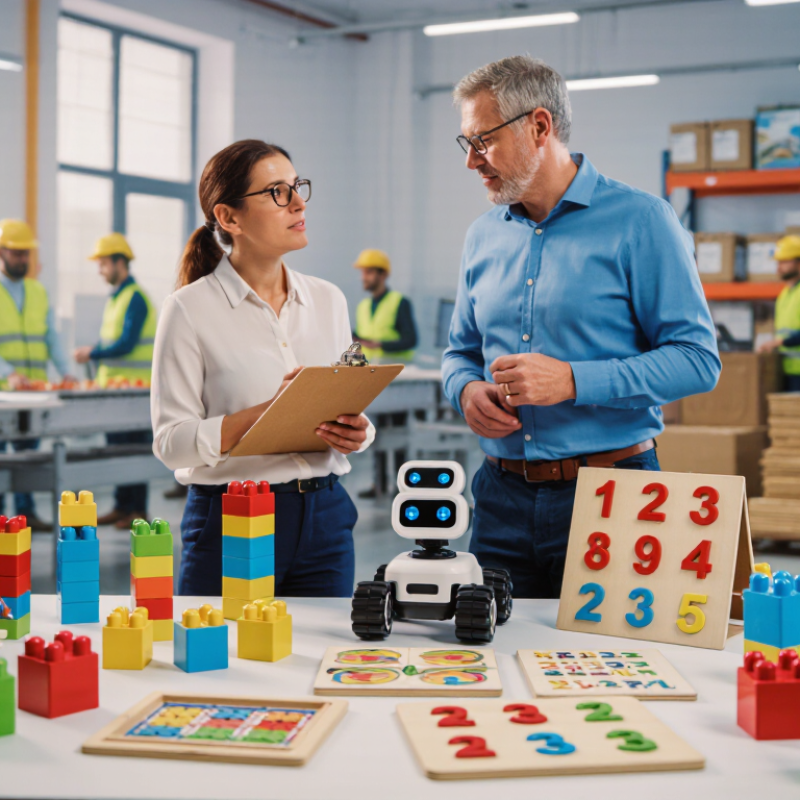
Top Ways to Source Educational Toys from Manufacturers?

Define Your Educational Toy Sourcing Requirements

Define Your Educational Toy Sourcing Requirements

A reliable sourcing process starts with a precise product brief. Define the child’s age range, learning goal, play setting, and expected skill level. A counting toy may teach number recognition, while a construction set can develop spatial thinking and hand control. Avoid broad phrases such as “high quality” or “fun design.” Describe measurable details instead, including piece size, color limits, weight, storage method, and cleaning needs.

My early sourcing briefs were too vague. Suppliers sent attractive samples, but the toys did not match the classroom routine. That mistake taught me to include real-use conditions. State whether children will play independently or with an adult. Specify daily usage, expected order volume, target price, packaging needs, and acceptable production variation. Small details matter. For example, loose pieces can create storage problems, while complex instructions may frustrate younger learners.

Material and safety requirements must be written clearly before contacting manufacturers. Request material descriptions, surface-finish information, durability evidence, and relevant test documentation.

Set quality checkpoints for edges, moving parts, printing, odor, and color consistency. Ask for a pre-production sample and compare it with the approved specification. A sample can look perfect and still reveal weak hinges after repeated use.

Leave room for revision. Your first requirement list may be incomplete, and honest feedback from teachers, caregivers, or children can improve it. A practical brief protects the learning purpose, controls costs, and gives manufacturers fewer reasons to guess.

Identify and Compare Suitable Toy Manufacturers

Identifying suitable educational toy manufacturers starts with a clear product brief. Define the target age, learning objective, materials, dimensions, and expected order volume. A factory that produces wooden puzzles may not understand the needs of sensory or science-based toys. Ask for recent product samples, production photos, quality records, and references from similar projects. Samples reveal more.

Compare manufacturers using the same checklist. Review minimum order quantities, sample fees, tooling costs, lead times, packaging options, and communication speed. Request test reports for paint, plastic, small parts, and material safety from qualified laboratories. Confirm that the factory follows applicable toy safety requirements in your target markets. Do not accept vague promises. Details matter.

A useful comparison also includes factory experience and production control. During a video or in-person audit, inspect storage areas, assembly lines, inspection stations, and finished-goods shelves. Ask how workers record defects and how managers handle recalls or customer complaints. In my experience, a polished sample can hide inconsistent production. One supplier once delivered excellent prototypes but struggled with color matching in larger batches. That experience changed my process: I now approve a pre-production sample and define acceptable defect limits in writing. Cost still matters, but a slightly higher quote may protect delivery schedules and classroom safety. I sometimes overvalue fast replies, which is a weakness. Reliable evidence should outweigh friendly communication.

Evaluate Product Quality, Safety, and Certifications

When sourcing educational toys, inspect quality before negotiating price. Request a pre-production sample and examine seams, edges, hinges, and paint adhesion. Pull the toy firmly. Twist small parts. Check for loose magnets, sharp plastic, strong odors, and accessible battery compartments. A smooth sample can still hide weak joints. Ask for the exact material specification, age grading, production controls, and a traceable batch code.

Safety evidence must match the finished product, not a similar model. For major markets, request relevant testing against ASTM F963, EN 71, CPSIA, or other applicable requirements. Use laboratories accredited to ISO/IEC 17025 where possible. Review test dates, sample descriptions, chemical results, mechanical tests, and the manufacturer’s corrective-action records. The U.S. Consumer Product Safety Commission reported approximately 231,000 toy-related emergency-department injuries in 2023. That figure makes small design details commercially important, not merely technical.

Certification documents deserve careful questions. A certificate may cover one color, one material, or one production batch. It may not cover later changes. Ask whether suppliers control paint, adhesives, magnets, wood, and recycled plastics separately. The European Commission’s Safety Gate reports regularly identify toys among widely notified unsafe products, including choking and chemical risks. I would also order random pre-shipment inspections. Not every defect appears during a factory visit. A missing report is a warning, but a perfect document set is not proof of perfect production.

Top Ways to Source Educational Toys from Manufacturers

Recommended sourcing evaluation weights for product quality, safety, and certification review

This practical 100-point evaluation model prioritizes safety and regulatory evidence. Before placing an order, verify test reports against the destination market, including applicable requirements such as ASTM F963, EN 71, CPSIA, chemical restrictions, age grading, warnings, and supplier traceability records.

Review Pricing, Minimum Orders, and Production Capacity

Top Ways to Source Educational Toys from Manufacturers

Pricing should be reviewed beyond the unit quote. Ask for tooling, packaging, sample, inspection, and shipping costs. A toy priced at $2 may exceed $4 after these charges. Request tiered pricing for 500, 1,000, and 5,000 units. This reveals how production volume changes your margin. Compare identical specifications, not vague product descriptions. I once underestimated packaging costs, and the final quotation changed our launch plan.

Minimum order quantities need careful negotiation. A low MOQ may increase the unit price, while a high MOQ can trap cash in slow-moving inventory. Ask whether the factory can combine colors, sizes, or learning themes within one order. Confirm deposit terms, balance timing, and replacement policies for defective items. Keep these details in writing. Verbal promises are easy to misremember.

Tips: Request a pilot batch before committing to full production. Inspect material quality, printing accuracy, moving parts, and packaging strength. Ask for recent capacity data, including monthly output, current bookings, staffing, and backup equipment. A manufacturer may promise 20,000 units monthly, but available capacity could be much lower during peak seasons. Review production records and visit the facility when practical. Leave room for delays. My forecasts have been too optimistic before, especially when several orders shared the same assembly line.

Finalize Contracts, Samples, and Quality Control Procedures

Sourcing educational toys from manufacturers requires more than comparing unit prices. A clear contract protects product quality, delivery schedules, and communication. Define materials, dimensions, colors, packaging, payment stages, and acceptable defect limits. Include approval procedures for artwork and product changes. A small wording gap can create a large dispute later.

Request production samples before placing a full order. Test the toy’s weight, edges, moving parts, paint finish, and instructional labels. Ask for samples from the actual production line, not only a polished prototype. Compare each sample with the approved specification sheet. In my experience, suppliers often explain problems clearly when questions are specific. Still, I once focused too heavily on appearance and missed a loose fitting during an early review. That mistake changed my inspection checklist.

Tips: Keep signed sample records with dated photos. Use an independent inspection team when practical. Check materials and workmanship before shipment, not after arrival. Set measurable quality standards, including drop testing, pull testing, and packaging checks where appropriate. Require documented corrective actions for failed inspections. Avoid accepting vague promises such as “premium quality.” Ask how the factory will measure it. A reliable manufacturer should provide traceable records, realistic lead times, and prompt answers. Do not rush approval because production slots seem limited. Careful verification usually costs less than reworking an entire shipment.

Top Ways to Source Educational Toys from Manufacturers? - Finalize Contracts, Samples, and Quality Control Procedures

Sourcing Dimension Recommended Action Required Evidence or Document Practical Acceptance Criteria Suggested Timing
Product Specification Define the target age range, learning objective, dimensions, materials, color requirements, packaging, and intended sales markets before requesting quotations. Approved product brief, technical drawing, bill of materials, artwork files, and packaging specification. All measurable requirements are documented; safety-critical parts and restricted materials are clearly identified. Before supplier comparison
Manufacturer Screening Compare several qualified manufacturers using the same request-for-quotation package and verify their experience with the required toy category. Completed supplier questionnaire, factory profile, production-capacity statement, and relevant audit or inspection records. The manufacturer can explain its process, subcontracting policy, quality system, minimum order quantity, and realistic lead time. 1–2 weeks
Regulatory Planning Identify the mandatory toy-safety requirements in every destination market before finalizing materials or tooling. Compliance matrix covering applicable requirements such as ASTM F963, EN 71, ISO 8124, chemical restrictions, labeling, and documentation. The selected test scope matches the product design, age grading, materials, and countries of sale. Before sample approval
Quotation Comparison Compare unit price, tooling, packaging, inspection, testing, shipping terms, payment schedule, and revision charges—not only the quoted product price. Comparable quotation sheet with currency, Incoterm, minimum order quantity, lead time, tooling ownership, and validity period. Every quotation uses the same specification and identifies one-time costs separately from recurring costs. 2–5 business days
Prototype and Sample Approval Request a pre-production sample, review fit, function, finish, artwork, packaging, and safety-related details, then record every revision. Dated sample photos, approval checklist, marked-up drawings, sample evaluation report, and signed golden-sample record. The approved sample matches the final specification and is retained as the reference standard for mass production. 1–3 sample rounds
Contract Terms Put the product specification, approved sample, delivery schedule, payment terms, inspection rights, corrective action, and liability terms into the contract. Signed manufacturing agreement, purchase order, technical annex, confidentiality terms, and change-control procedure. The contract defines acceptance standards, remedies for nonconformity, ownership of tooling and artwork, and approval requirements for changes. Before deposit or production
Incoming Material Control Require the manufacturer to inspect plastics, wood, fabric, coatings, magnets, fasteners, and packaging before use. Material inspection records, supplier declarations, certificates of analysis where applicable, and lot traceability records. Materials match the approved bill of materials, are identifiable by lot, and are held when documentation or inspection results are incomplete. Every production lot
In-Process Quality Control Inspect critical operations such as molding, cutting, assembly, printing, stitching, and fastening while production is running. Process checklist, first-piece approval, defect log, corrective-action report, and calibration records for measuring equipment. Critical defects are stopped immediately; recurring defects receive documented root-cause analysis and corrective action. At setup and during production
Final Inspection Use a written inspection plan covering quantity, appearance, dimensions, function, packaging, labels, and safety-related workmanship. Final inspection report, carton-count record, defect photographs, and sampling plan based on a recognized AQL procedure. Shipment is released only when the agreed sample limits are met and no critical safety defect is found. Before shipment
Laboratory Testing Arrange testing through a competent laboratory using production-representative samples, especially after material, design, or supplier changes. Test report, sample identification, laboratory scope, test date, and documented linkage to the production batch. Results meet the legal and customer requirements applicable to the destination market and product category. Before launch and after relevant changes
Packaging and Label Verification Check warnings, age grading, instructions, traceability marks, barcode data, carton labels, and packaging strength against the approved artwork. Approved artwork, packaging checklist, label proof, carton test record, and product traceability information. Printed information is accurate, legible, market-specific, and consistent with the tested product and approved sample. Before mass production and packing
Shipment Release and Records Release the order only after inspection, testing, document review, and quantity reconciliation are complete. Release approval, commercial invoice, packing list, test records, inspection report, batch information, and shipping photographs. The shipment is fully traceable from finished cartons back to production date, material lots, inspection results, and approved specifications. Immediately before dispatch
Post-Delivery Review Review customer complaints, returns, defect rates, delivery performance, and corrective actions before placing the next order. Supplier scorecard, complaint log, return analysis, corrective-action closure record, and updated risk assessment. Issues are assigned to an owner, given a due date, verified after correction, and incorporated into the next purchase order when necessary. Within 30 days of delivery

FAQS

What details should an educational toy sourcing brief include?

State the child’s age range, learning goal, play setting, and expected skill level. Include piece size, colors, weight, storage method, cleaning needs, order volume, and target price. Vague wording causes avoidable guesses.

Why should real classroom conditions appear in the product brief?

Explain whether children play independently or with an adult. Describe daily usage, storage routines, and instruction difficulty. Loose pieces may disappear quickly. Complex directions can frustrate younger learners.

What material and safety information should buyers request?

Request material descriptions, surface-finish details, durability evidence, and relevant test documents. Check edges, moving parts, printed areas, odors, and color consistency. The requirements should be written before contacting manufacturers.

Why is a pre-production sample important?

It allows comparison with the approved specification before full production. Test weight, edges, hinges, moving parts, paint finish, and labels. A polished sample can still hide weak fittings. I learned that too late.

What should an educational toy contract clearly define?

Specify materials, dimensions, colors, packaging, payment stages, delivery schedules, and defect limits. Include approval rules for artwork and product changes. A small wording gap can cause a large dispute.

Should buyers inspect samples from the actual production line?

Yes. Request production-line samples, not only attractive prototypes. Compare them with the signed specification sheet and dated photos. Appearance alone is insufficient.

How can buyers create measurable quality standards?

Define acceptable defects and suitable checks for durability and packaging. Use drop testing or pull testing where appropriate. Ask for documented corrective actions after failed inspections. “Premium quality” is not a measurable standard.

When should an independent inspection team be considered?

Use one when practical, especially for larger or complex orders. Inspect materials and workmanship before shipment. Keep traceable records with photos and test results. Rushing approval can cost more than careful verification.

Conclusion

Learning how to source educational toys from manufacturers begins with clearly defining your product requirements, including the target age group, learning objectives, materials, design features, and expected order volume. Next, identify several suitable manufacturers and compare their experience, communication, customization options, production capabilities, and reliability. A careful evaluation should also cover product quality, child safety, testing procedures, and relevant certifications to ensure the toys meet applicable market requirements.

Before choosing a supplier, review pricing, minimum order quantities, lead times, payment terms, and production capacity. Request samples to assess workmanship, functionality, packaging, and consistency with your specifications. Once the right manufacturer is selected, finalize a detailed contract covering product standards, delivery schedules, responsibilities, and corrective procedures. Establish clear quality control steps, including pre-production approval, in-process inspections, and final checks, to reduce risks and support consistent product quality over time.

Aria

Aria

Aria is a dedicated marketing professional with a deep passion for innovative strategies and a keen understanding of our company's product offerings. With a wealth of experience in the industry, Aria excels at crafting engaging content that highlights the unique features and benefits of our......