Why Are Educational Toys Important 2026 Top Types?

Time:2026-10-21 Author:Mason
0%

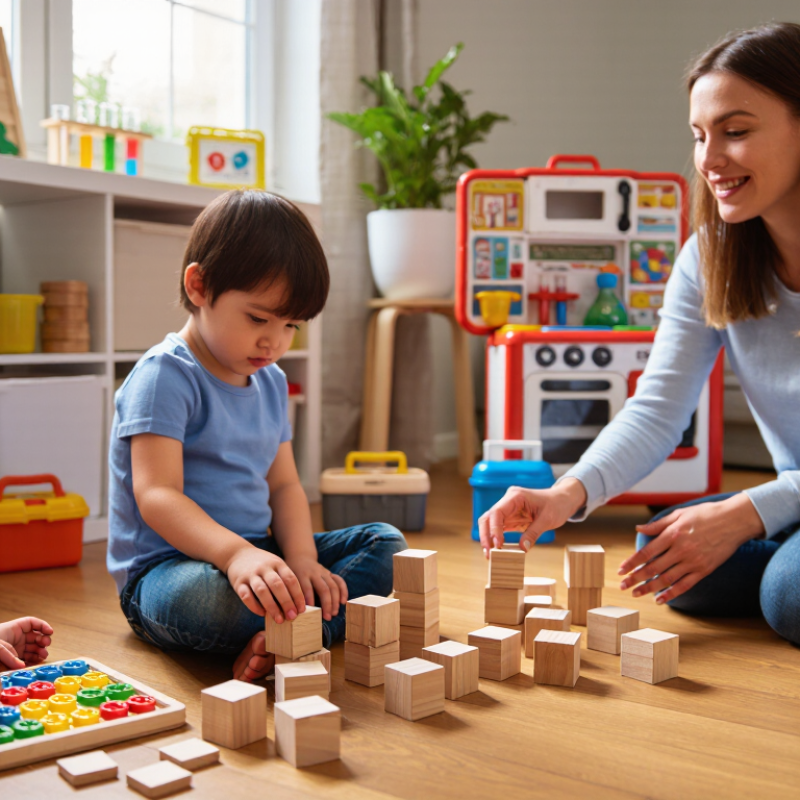
Why are educational toys important in 2026? The answer begins with how children learn through active experience. A child stacking wooden blocks tests balance, shape, and patience. Another child sorting colored counters practices early mathematics without completing a worksheet. These small actions turn abstract ideas into visible, memorable experiences.

Developmental psychologist Dr. Kathy Hirsh-Pasek has said, “Play is not frivolous. It is brain building.” Her view reflects a broad principle in child development: well-designed toys invite curiosity, problem-solving, language, movement, and social connection. Construction sets can strengthen spatial reasoning. Pretend-play kits can support vocabulary and emotional understanding. Puzzles, sensory materials, and beginner science toys can encourage careful observation. The best choices usually match a child’s age, interests, abilities, and need for open-ended play.

The toy alone is not the teacher. Adult interaction matters. A parent asking, “What could we try next?” may extend a child’s thinking more than a flashing feature. Play needs space. It also needs time. No toy works perfectly for every child, and some products labeled “educational” offer little beyond noise or repetition. That is worth questioning. In this guide, we examine why are educational toys important, then explore the leading types for 2026. We will consider learning value, safety, durability, accessibility, and real household use. A thoughtful toy may show its value slowly: fewer instructions, more discovery, and a child returning to it tomorrow.
Why Are Educational Toys Important 2026 Top Types?

Defining Educational Toys: Learning Benefits and the 2026 Market Outlook

Educational toys are designed to make learning active, visible, and age-appropriate. They may include puzzles, building sets, counting games, science kits, or story-based role-play materials. Unlike ordinary entertainment products, they connect play with a measurable skill, such as spatial reasoning or early literacy. Yet the label can be vague. A colorful toy is not automatically educational. Parents and teachers should ask what children actually do, notice, and remember while using it. Good design leaves room for mistakes, questions, and repeated attempts.

In classroom and home settings, hands-on play often improves engagement because children receive immediate feedback. A balance puzzle can show movement before a child understands the word “equilibrium.” Letter tiles support sound recognition through touch and repetition. Open-ended construction can develop planning, patience, and fine-motor control. The benefits are not guaranteed, however. If adults correct every answer, curiosity may shrink. Some toys promise more than they deliver. Careful observation matters more than attractive packaging.

In 2026, market demand is likely to favor toys combining physical activity, inclusive design, and light digital support. Adaptive difficulty, multilingual instructions, recycled materials, and tools for neurodiverse learners may become stronger purchasing factors. Families will also examine durability, privacy, repairability, and evidence behind learning claims. Digital features can personalize practice, but screens should not replace conversation or hands-on discovery. I may be too cautious here. Emerging technology could improve access in meaningful ways. Independent testing and transparent age guidance remain essential for trustworthy growth.

How Play Builds Skills: AAP and UNICEF Evidence on Child Development

Educational toys matter because children learn through active, responsive play. The American Academy of Pediatrics explains that play can support language, problem-solving, self-control, and social development. UNICEF also connects playful learning with communication, creativity, and early confidence. These benefits grow when adults join the play, rather than simply placing toys nearby.

In 2026, useful choices include building blocks, puzzles, pretend-play materials, art supplies, and simple science sets. Blocks can develop spatial reasoning as a child balances a small tower. A puzzle encourages persistence when one piece fails to fit.

Pretend kitchens and doctor kits help children practice vocabulary, empathy, and cooperation. Open-ended materials often create more learning opportunities than toys with one fixed result.

Evidence does not mean every educational toy works equally well. A costly toy cannot replace conversation, movement, or shared attention. A quiet five-minute game may teach more than a noisy electronic device used alone. Adults should watch the child’s response, ask gentle questions, and allow mistakes without taking over. This approach is not perfect; some children lose interest quickly, and caregivers may feel unsure. That uncertainty deserves attention, because meaningful play depends on the child, the setting, and the relationship around the toy.

2026 Top Types: STEM Toys, Coding Kits, and Engineering Sets

Educational toys in 2026 are becoming practical tools for developing curiosity, problem-solving, and patient thinking. STEM toys let children test magnets, balance structures, measure water, or observe simple patterns. These activities turn abstract science into something they can touch and adjust. Small hands notice.

Coding kits introduce instructions through lights, sounds, movement, and basic logic. Children may arrange commands, predict results, and correct errors without fearing a low grade. A short challenge can teach sequencing better than a long explanation. However, screen-free coding is not automatically better. The learning value depends on clear goals, suitable difficulty, and time for independent exploration.

Engineering sets encourage children to design bridges, vehicles, towers, and moving parts. They learn that a weak joint can collapse and that extra weight changes stability. In my experience, open-ended building creates richer discussion than copying one perfect model. Mistakes matter. Adults should check age guidance, material quality, small-part risks, and electrical safety before use. They can ask, “What would you change?” rather than immediately fixing the structure.

Not every educational toy produces visible progress. Some children need repeated attempts, quieter spaces, or a simpler starting task. I sometimes overestimate how quickly a child can understand instructions, especially when several steps appear together. Good toys leave room for questions, revisions, and unfinished designs. That uncertainty is part of the learning.

Why Are Educational Toys Important? 2026 Top Types

STEM toys, coding kits, and engineering sets turn abstract concepts into hands-on learning experiences. The chart compares the main learning domains each type commonly develops.

The scores represent the number of core learning domains directly practiced: science, technology, engineering, mathematics, computational thinking, creativity, and problem-solving. These are learning-domain counts, not market-share estimates.

2026 Top Types: Montessori, Sensory, and Social-Emotional Toys

Why Are Educational Toys Important 2026 Top Types?

2026 Top Types: Montessori, Sensory, and Social-Emotional Toys

Educational toys matter because children learn through active, repeated experiences. UNICEF’s Early Childhood Development Index reports that about 69% of children aged 3–4 show healthy developmental progress globally. The remaining gap reminds adults that play materials should support real skills, not only entertain. Montessori toys use simple tools, such as wooden counters, dressing frames, and sorting trays. They encourage concentration, hand control, and independent problem-solving. The American Academy of Pediatrics also recommends simple, open-ended toys that promote caregiver interaction and imagination.

Sensory toys offer touch, movement, sound, and visual feedback. A textured ball, water bead alternative, or nesting cup can help children notice patterns and regulate attention. Safety and age suitability still matter. Social-emotional toys add another layer. Puppets, emotion cards, and cooperative games let children practise naming feelings, waiting, sharing, and repairing small conflicts. The OECD’s Survey on Social and Emotional Skills links these abilities with students’ well-being, relationships, and academic outcomes. That evidence is useful, but toys alone cannot create empathy.

Adults must participate.

A common weakness is treating educational toys as miniature lessons. Children may ignore carefully selected materials, and that is normal. Observe their interests, allow open-ended use, and ask gentle questions instead of directing every action. The UNICEF and LEGO Foundation Learning through Play report stresses that playful learning works best when children feel engaged, active, social, and supported. That balance remains easy to miss in busy homes and classrooms.

Choosing Safely: CPSC Data, ASTM F963 Standards, and Age Suitability

Why Are Educational Toys Important in 2026? Top Types

Educational toys can build language, coordination, problem-solving, and early scientific thinking. However, learning value should never replace safety checks. The U.S. Consumer Product Safety Commission’s Toy-Related Deaths and Injuries report estimated about 231,900 toy-related injuries among children under 15 in 2023. These cases remind parents that attractive design does not prove safe use. A toy needs suitable materials, secure parts, and clear instructions.

ASTM F963-23 is the current U.S. mandatory toy safety standard under federal requirements. It addresses hazards such as sharp edges, magnets, sound levels, and accessible small parts. Yet ASTM compliance is not a guarantee for every play situation. Caregivers should match the toy’s age label with the child’s actual abilities. A child who still mouths objects needs extra caution, even when the packaging suggests a higher age range. That detail is easy to miss.

Tips: Check for loose eyes, wheels, batteries, and magnets before play. Keep small-part toys away from children under three. Read recall notices through CPSC.gov. Watch the first use. Observe how the child pulls, bites, twists, or shares the toy. Replace damaged pieces promptly. Some age labels feel overly cautious, but careful selection is better than confident guessing.

Why Are Educational Toys Important 2026 Top Types? - Choosing Safely: CPSC Data, ASTM F963 Standards, and Age Suitability

Educational Toy Type Main Learning Benefits Typical Age Suitability Key Safety Risks Safety Selection Checks Relevant U.S. Safety Reference
Building Blocks and Construction Sets Spatial reasoning, problem-solving, fine-motor control, creativity, and early mathematics. Large pieces: approximately 12 months and older; small-piece sets: commonly 3 years and older. Choking from small components, sharp edges, and pinch points. Check the age label, inspect for breakage, and keep small parts away from children under 3. ASTM F963 requirements for small parts, accessible edges, points, and mechanical hazards.
Puzzles and Matching Games Memory, visual discrimination, concentration, language development, and logical thinking. Simple knob or inset puzzles: approximately 18 months and older; complex puzzles: 3 years and older. Small pieces, splinters, paper cuts, and loose magnets in some products. Choose securely attached knobs, durable materials, and pieces too large to swallow for younger children. ASTM F963 physical and mechanical requirements; federal small-parts restrictions where applicable.
Pretend-Play and Role-Play Sets Communication, social-emotional skills, vocabulary, cooperation, and everyday-life understanding. Usually approximately 2 years and older, depending on accessories and components. Small accessories, cords, detachable parts, and imitation food or medication that may be mistaken for real items. Avoid long cords for toddlers, verify secure attachments, and store realistic toy items separately from real products. ASTM F963 labeling, materials, mechanical, and reasonably foreseeable-use requirements.
Science, Technology, Engineering, and Mathematics Kits Scientific inquiry, measurement, coding, engineering design, experimentation, and persistence. Often 8 years and older; some supervised kits are designed for younger children. Small parts, batteries, heat, chemicals, tools, electrical components, or magnets. Follow instructions, provide adult supervision, use protective equipment where specified, and secure chemicals and batteries. ASTM F963 requirements for chemistry, electrical, battery, magnet, and instructional-toy hazards as applicable.
Art, Craft, and Manipulative Materials Hand strength, hand-eye coordination, self-expression, planning, and sensory learning. Large, non-toxic materials: approximately 3 years and older; tools and fine materials require greater maturity. Ingestion, sharp tools, allergens, staining materials, and small beads or sequins. Look for appropriate labeling, non-toxic art materials, rounded tools, and close supervision during use. ASTM F963 material and labeling provisions; art-material labeling may also involve federal requirements outside ASTM F963.
Board Games and Strategy Games Counting, turn-taking, strategic thinking, emotional regulation, communication, and decision-making. Simple games: approximately 3 years and older; strategy games: commonly 6 years and older. Small tokens, dice, cards, magnets, and frustration caused by unsuitable complexity. Match rules and component size to the child’s developmental level; count pieces after play. ASTM F963 small-parts and mechanical-safety provisions; follow the stated age grading.
Musical and Rhythm Toys Auditory discrimination, rhythm, memory, coordination, language, and creative expression. Large, simple instruments: approximately 12 months and older; complex instruments: 3 years and older. Excessive sound levels, detachable mouthpieces, cords, sharp edges, and battery access. Choose moderate-volume products, secure battery compartments, and inspect mouthpieces and seams regularly. ASTM F963 sound-producing, battery, mechanical, and labeling requirements as applicable.
Ride-On, Push, and Active-Movement Toys Gross-motor development, balance, coordination, spatial awareness, and physical confidence. Varies widely; select only when the child meets the product’s height, weight, balance, and skill requirements. Falls, collisions, tipping, entrapment, and traffic or roadway hazards. Use on suitable surfaces, provide protective equipment when appropriate, supervise actively, and inspect wheels and fasteners. ASTM F963 requirements where applicable; additional rules may apply to specific ride-on or wheeled products.

CPSC-Based Safety Indicators and Selection Guidance

Safety Dimension Verified Reference or Practical Meaning Recommended Action
CPSC Toy-Injury Data The U.S. Consumer Product Safety Commission reported an estimated 231,400 toy-related injuries treated in U.S. emergency departments among children under 15 in 2023, along with 10 toy-related deaths reported for that year. Treat age labels, supervision, product inspections, and safe storage as essential parts of toy selection.
Choking and Small Parts Small parts can present a choking hazard, especially for children under 3 years and for children who still mouth objects. Keep small components separated, check toys after breakage, and follow the product’s age warning.
ASTM F963 Toy Standard ASTM F963 is the U.S. toy-safety standard incorporated into federal toy-safety requirements. It addresses hazards including mechanical, physical, flammability, chemical, electrical, battery, magnet, sound, and labeling concerns, as applicable. Use products with clear safety instructions and required tracking or compliance information; do not treat a standard reference as a substitute for supervision.
Age Suitability Age grading should reflect the toy’s design, foreseeable use, complexity, and hazards. A child’s individual skills and behavior may require a more conservative choice. Consider both the printed age range and the child’s ability to follow instructions, avoid mouthing, and use the toy safely.
Batteries and Magnets Button or coin batteries can cause serious internal chemical injuries if swallowed. High-powered loose magnets can cause severe gastrointestinal injuries if swallowed. Secure battery compartments, store spare batteries safely, keep loose magnets away from children, and seek urgent medical advice after suspected ingestion.
Recall and Incident Checking CPSC recall notices identify products associated with defects, injuries, or violations of applicable safety requirements. Before purchase and periodically afterward, search the official CPSC recall database using the product description or model information.

Sources: U.S. Consumer Product Safety Commission, “Toy-Related Deaths and Injuries” report for 2023; CPSC toy-safety guidance; ASTM F963, Standard Consumer Safety Specification for Toy Safety; U.S. federal toy-safety regulations under 16 CFR Part 1250.

FAQS

What are STEM toys designed to teach?

STEM toys help children explore magnets, balance, water, measurement, and simple patterns. Small hands notice.

How do coding kits support learning?

Coding kits teach sequencing through lights, sounds, movement, and basic logic. Children predict results, spot errors, and try again.

Is screen-free coding always better?

Not necessarily. Learning depends on clear goals, suitable difficulty, and enough independent exploration time.

What can children learn from engineering sets?

They can build bridges, towers, vehicles, and moving parts. A weak joint may collapse, while extra weight changes stability.

Should children copy one perfect model?

Open-ended building often creates richer discussion. Mistakes matter. Adults can ask, “What would you change?” instead of fixing everything.

How should adults choose a suitable educational toy?

Check the age guidance, materials, loose parts, magnets, batteries, sharp edges, and electrical safety. Match the toy to the child’s actual abilities.

What safety checks should happen before play?

Look for loose wheels, eyes, batteries, magnets, and damaged pieces. Keep small parts away from children under three. Watch closely.

Do educational toys always show clear progress?

No. Some children need repeated attempts, quiet spaces, or simpler tasks. I sometimes expect understanding too quickly.

What does a useful educational toy allow?

It leaves room for questions, revisions, and unfinished designs. Uncertainty can support learning, though progress may look messy.

Conclusion

Educational toys are designed to make learning active, enjoyable, and meaningful through play. Understanding why are educational toys important begins with their ability to support children’s cognitive, physical, language, and social-emotional development. Play-based activities can encourage curiosity, problem-solving, communication, creativity, coordination, and confidence. In 2026, the educational toy market is expected to continue expanding as families seek products that combine entertainment with practical learning experiences.

Top choices include STEM toys, coding kits, construction and engineering sets, Montessori-inspired materials, sensory tools, and social-emotional play products. These toys can introduce early science, technology, mathematics, independence, self-regulation, and cooperation in age-appropriate ways. However, selecting a suitable toy also requires careful attention to safety. Parents and educators should consider developmental readiness, clear instructions, durable construction, small-part risks, and age recommendations. Reviewing recognized safety guidance, including CPSC information and ASTM F963 requirements, can help ensure that play remains both educational and secure.

Mason

Mason

Mason is a seasoned marketing professional with a deep expertise in the company's offerings and a passion for driving brand awareness. With a strong background in digital marketing strategies, he has an innate ability to connect with diverse audiences and effectively communicate product benefits.......